


Innovations like Generative AI, data analytics, and increased investment in cloud data warehouses are shaping the future of the cloud. Companies that overlook these trends risk missing out on its full potential.We spoke with Prakash Pilley, CEO of Deployflow, about key cloud computing trends that will unlock new business opportunities across industries.
As we anticipate how companies will leverage the power of the cloud, the cloud landscape is changing at enormous speed forcing companies to keep up with the latest trends to stay ahead of the curve.
Many innovations are driving the cloud’s evolution, from reliance on Generative AI and data analytics to higher investments in cloud data warehouses. Companies that do not understand the most transformative cloud trends will fail to unlock the full value of the cloud.
We caught up with Prakash Pilley, CEO at Deployflow, to discuss the key trends in cloud computing that will unlock numerous opportunities across industries to create business value.
What Are the Key Trends in Cloud Transformation for 2024 and Beyond?
The future of cloud computing holds a lot of exciting opportunities. Here are the key factors that could reshape how businesses operate in the cloud:
1. The Reliance on GenAI and AI will be the Main Driver of Cloud Transformation
With increasing data volumes, more businesses will rely on GenAI and AI to enable intelligent business processes that could unlock new revenue streams.
Prakash explains that “AI is already making a significant impact across industries, from healthcare, where it helps predict patient outcomes, to finance, where it plays a key role in fraud detection and risk management. The wide-ranging impact of AI will demand businesses shift to the cloud, enabling them to streamline their processes and become more efficient.”
2. Edge Computing will Continue to Push the Boundaries of Real-Time Insights
Edge Computing bridges the gap between enterprise applications and data sources, enabling transformative use cases in industries where real-time decision-making and low latency are critical.
Prakash points out that “edge computing will not only help organisations reduce their downtime and prevent issues associated with the cloud, but it will also enhance data security and significantly increase companies’ revenue.”
3. Increase in Hybrid Multi-Cloud Solutions
The future of cloud computing will be heavily influenced by market trends and driven by regulatory pressures to avoid vendor lock-in, which we could have witnessed in the EU and UK markets. Regulatory investigations will require greater fairness and transparency in cloud market pricing, which will further encourage the adoption of multi-cloud solutions.
“Data privacy concerns related to AI applications will further push companies to choose multi-cloud environments allowing them to have better control, and enhance both data security and flexibility”, says Prakash.
4. Higher Investments in Data Warehouses
As more companies are interested in shifting to the cloud, cloud hyperscalers are increasingly investing in data warehouses that offer several new features and capabilities, including repositories for structured and unstructured data, security, data and governance protection, simplified data management and architecture for real-time data analytics, etc.
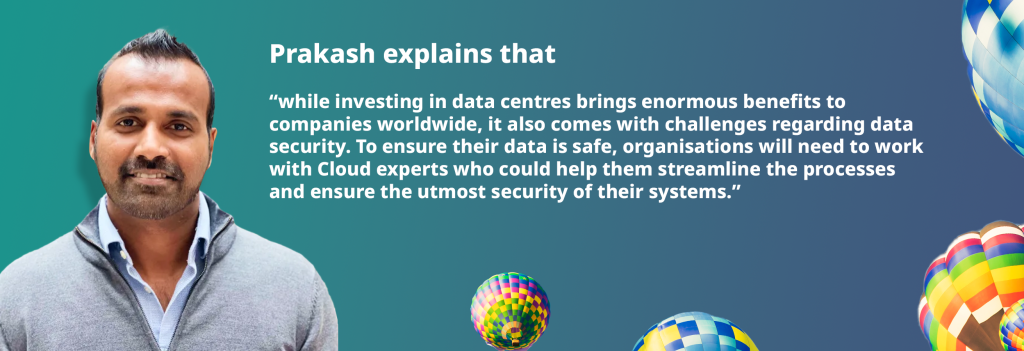
Prakash explains that “while investing in data centers brings enormous benefits to companies worldwide, it also comes with challenges regarding data security. To ensure their data is safe, organisations will need to work with Cloud experts who could help them streamline the processes and ensure the utmost security of their systems.”
5. Containerisation and Microservices
While containerisation ensures consistent performance across multiple environments, microservices architectures help developers break applications into smaller services facilitating reusability and portability to developers.
“Containerisation and microservices are already making waves across the field of cloud computing – many businesses have already adopted these technologies in one form or another. The trend is showing no signs of slowing down. More and more companies are independently developing, scaling, and deploying these services, allowing companies to quickly respond to any new challenges and improve the reliability of the system,” says Prakash.
6. Focus on Sustainability to Boost Cloud Adoption
A growing number of companies around the globe are prioritising cloud sustainability.
Many companies recognise that “minimising energy consumption linked to computing engines, infrastructure services, and extensive storage needs is critical to reaching their sustainability product goals.
Here at Deployflow, we see more and more companies exploring innovative cloud solutions aimed at achieving zero carbon emissions in the future.”
What are the Best Cloud Technologies to Invest in for the Future?
Here are five emerging cutting-edge technologies that are transforming cloud computing:
Serverless computing – In the serverless computing model, cloud service providers handle routine infrastructure tasks like scaling, scheduling, and patching. This frees engineers to focus on the business logic of their applications, allowing end users to pay only for the resources they use.
DevOps brings teams with different domain expertise together to collaborate on a single goal, giving companies a competitive edge.
Internet of Things (IoT) – IoT in the cloud involves storing and processing the massive amounts of data generated by interconnected devices online instead of on local servers. Cloud-based IoT platforms are revolutionising industries globally, enabling smart homes controlled via smartphones and intelligent manufacturing systems that enhance production efficiency.
DevSecOps – Cloud computing apps offer several benefits but also introduce various security challenges. This is where DevSecOps steps in – it integrates security into the system from the start by automating core security tasks and embedding controls and processes within workflows.
Open-source services – Open-source cloud platforms allow companies to tailor their infrastructure to suit their own business needs, enabling a seamless addition of new features, raising fewer security concerns, and enhancing team collaboration.
How can Businesses Leverage Cloud Transformation to Stay Competitive?
Around 1 in 4 business executives claim their company’s Big Data initiatives are profitable, according to Capgemini.
Cloud transformation is a catalyst for innovation—it is a no-brainer. From bringing the security of your data to the highest level and maximising your return on investment to streamlining processes for enhanced productivity and turning the data into powerful insights to accelerating time to market and ensuring business continuity, the list of gains from cloud transformation goes on and on.
“The cloud is experiencing rapid growth, continuously driving innovation. Everything is already interconnected through the cloud and data and facilitated by software. At Deployflow, we see ourselves as a cloud transformation enabler for this evolving world, with a strong emphasis on the concept of the intelligent cloud,” says Prakash.
What Role Does AI Play in the Next Phase of Cloud Transformation?
Artificial Intelligence (AI) enables companies to shift from reactive to proactive operations to improve cost efficiency, resource utilisation, and system reliability.
“AI-powered natural language interfaces are reshaping cloud management, shifting it from a technical challenge to a logical one. By empowering business users with conversational AI, these interfaces facilitate easier navigation of complex cloud operations, resulting in quicker and more effective problem-solving.
Additionally, AI capabilities in cloud management herald a new era of automation and optimisation, enabling organisations to adapt to the ever-changing workplace” explains Prakash.
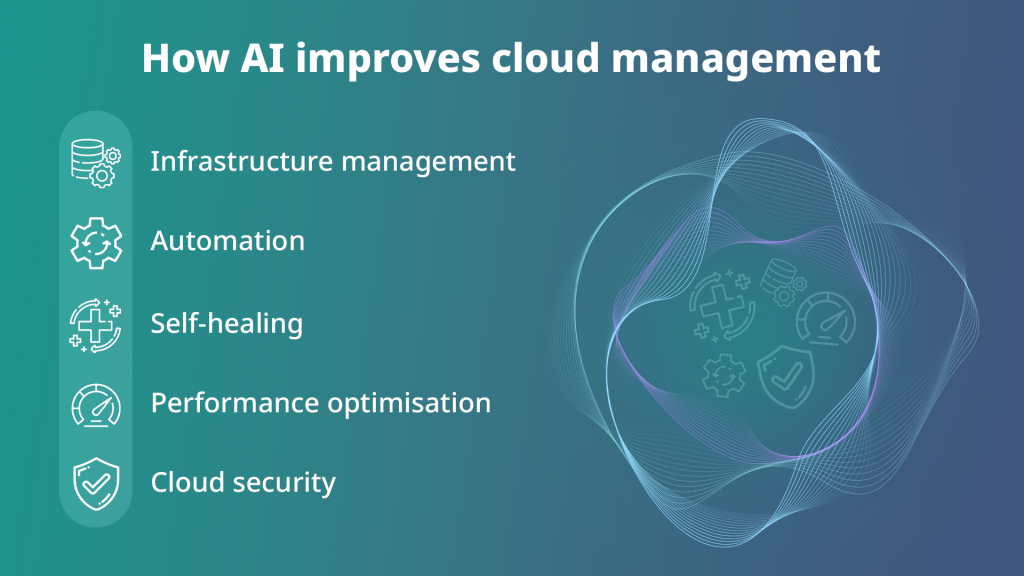
The analytical and automation capabilities of AI are leveraged to improve cloud management in the following ways:
Performance optimisation: AI monitors system performance, enhances predictive maintenance, and balances workloads for optimal operation, reduced downtime and higher efficiency.
Automation – AI-driven cloud automation tools improve IT tasks and empower virtual assistants to answer customer queries
Infrastructure management: AI enables the optimization and automation of cloud resource management, which significantly reduces costs and enhances efficiency.
Security – AI-powered security tools help detect potential threats and provide adequate responses.
Self-healing – AI can quickly detect and automatically fix certain system failures.
What Skills are Needed for a Successful Cloud Transformation Journey?
The State of Cloud Strategy Survey by HashiCorp revealed that 41% of respondents identified the lack of in-house skills as a concern, while 57% noted that the overall skills shortage ranks among the top challenges in cloud computing.
This does not come as a surprise, considering how many skilled engineers are needed to implement an advanced cloud strategy. So, what are the key skills needed for successful enterprise cloud adoption? Here are the top 5.
1. Architecture expertise
Cloud architects can adapt their traditional system design skills from on-premises to cloud environments.
“Architects must leverage their core cloud knowledge and experience in deploying applications and systems. This role involves planning and designing the cloud infrastructure to support organisational goals.” says Prakash.
2. Operations engineering expertise
A cloud engineer is a professional who implements the architect’s designs, ensuring that everything operates efficiently and effectively.
“This highly technical role involves setting up and maintaining cloud infrastructure, incorporating traditional IT skills like patching, securing, monitoring, and troubleshooting virtual systems.”, explains Prakash.
3. Security and compliance know-how
Cloud security is one of the top priorities for companies moving to the cloud. Security needs to be an integral part of any cloud migration process. To make the entire process run smoothly, security practitioners must have a deep knowledge of all of the nuances related to the cloud to evaluate and prevent threats and various vulnerabilities. On top of this, Zero Trust Architecture should be incorporated into cloud security strategy as it secures an organization by eliminating implicit trust and continuously validating every stage of digital interaction.
Prakash adds, “The cloud security experts play a critical role in building a secure cloud environment and may have to work closely with the legal team to ensure that all of the security provisions are included in the contract.”
4. Integration experts
Organisations need experts to seamlessly integrate cloud-based systems, ensuring smooth data flow and business operations regardless of where applications are hosted.
“Cloud hasn’t changed the need for integration, but it has certainly highlighted its importance,” says Prakash.
Unlock cloud value with Deployflow
Explore our cloud consulting, cloud security, and cloud management services to learn how we can help you unlock the speed and agility of cloud no matter where you are on your cloud transformation journey.
Explore our BLOG
Recent articles

ISO 42001 Explained: Requirements, Certification and What Your Engineering Team Must Build
ISO 42001 is the international standard that demonstrates your organisation governs AI properly, and enterprise...
read full article

Is Claude Down? Anthropic Outage: Protect Your Cloud Infrastructure
Claude went down across every surface on 29 September 2026. From 14:00 to 14:59 UTC,...
read full article

Top 10 Healthtech Companies in 2026: What Their Growth Means for AI and DevOps
Every software change that reaches a hospital has to clear regulatory, legacy system, and clinical...
read full article