



The most dangerous cloud attacks don’t kick down the door. They inherit the keys you already trust. Shai-Hulud 2.0 is one such attack. Microsoft Defender’s warning about it shows how identity-based cloud threats can bypass traditional perimeter defences entirely.
TL;DR
Shai-Hulud 2.0 shows how identity-based cloud attacks bypass traditional perimeter defences.
Microsoft Defender’s warning highlights weaknesses in CI/CD pipelines, service accounts, and third-party dependencies.
Password rotation alone cannot stop identity-driven cloud attacks that abuse long-lived API keys and tokens.
This Microsoft Defender warning stands out because Shai-Hulud 2.0 doesn’t rely on one vulnerability or mistake, but on how cloud-native ecosystems are designed to trust identities and automation by default.
As Forbes noted, Microsoft’s own security researchers described it as “one of the most significant cloud-native ecosystem compromises observed recently,” a signal that identity, automation, and supply-chain trust have become the new fault lines in cloud security.
If your cloud environment uses CI/CD pipelines, service accounts, or third-party dependencies, you need to read this because the same trust paths Shai-Hulud 2.0 exploited likely exist in your setup right now.
What Microsoft Defender’s Shai-Hulud 2.0 Alert Reveals About Cloud Identity Risk
The Microsoft Defender Security Research Team rarely uses urgent language without reason.
In this case, the warning wasn’t raised because of mass password theft or another phishing campaign, but because attackers compromised trusted cloud supply-chain components, allowing them to move through environments without tripping the security controls organisations normally depend on.
Microsoft’s guidance to act rapidly and rotate credentials reflects the scale and speed at which compromised identities can be reused across managed cloud services, CI/CD pipelines, and developer environments.
What makes this incident fundamentally different is its reach and automation.
Shai-Hulud 2.0 operates inside the cloud ecosystem itself, abusing trusted package workflows, API keys, and service identities to spread laterally without noisy exploits or user interaction.
That’s why Microsoft describes it as one of the most significant cloud-native ecosystem compromises observed recently: it doesn’t rely on tricking users or brute-forcing credentials, but on quietly inheriting access through the same systems designed to accelerate modern cloud development.
What Is Shai-Hulud 2.0? A Cloud-Native Attack, Not a Traditional Breach
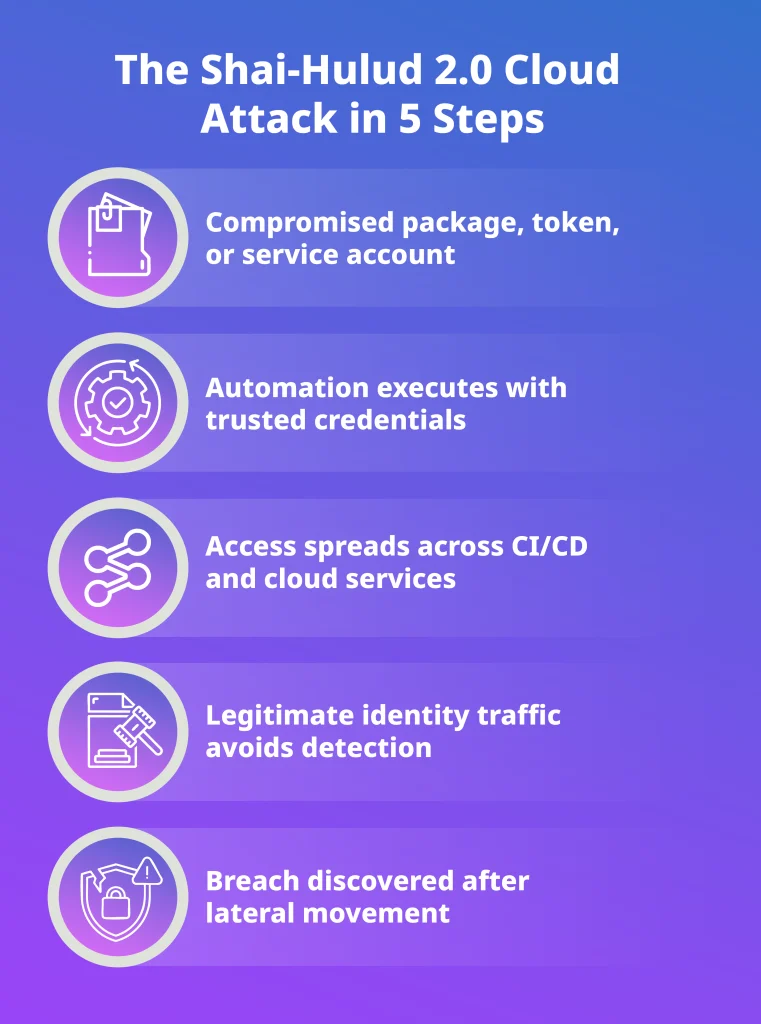
Shai-Hulud 2.0 is not a breach in the traditional sense. There is no perimeter being smashed, no firewall rule being bypassed, and no single server acting as ground zero. Instead, the attack operates entirely inside cloud-native workflows, targeting identities, tokens, and trusted software supply chains rather than physical or virtual infrastructure.
At its core, the Shai-Hulud 2.0 attack abuses cloud identities. API keys, service principals, CI/CD credentials, and developer secrets become the entry point, not vulnerable machines.
Once a single identity is compromised, the attacker inherits whatever access that identity already has across cloud services, repositories, and automation pipelines. This makes the attack quiet, fast, and difficult to detect using infrastructure-focused security tools.
Cloud-native architecture decisions often expand the impact of a single compromise far beyond what teams expect. Modern platforms encourage shared identities, reusable tokens, broad permissions for automation, and implicit trust between services.
These patterns improve developer velocity, but they also allow compromised credentials to unlock far more than a single workload. In a cloud environment built for speed and scale, one exposed secret can open doors across multiple systems.
From there, lateral movement doesn’t require scanning networks or exploiting new vulnerabilities. Attackers move by following existing trust relationships among packages, pipelines, and cloud services.
This cloud-native worm campaign spreads by leveraging these built-in connections, allowing it to propagate across environments in ways that traditional security models were never designed to stop.
Why Password Rotation Alone Is Not Enough
Microsoft’s guidance to rapidly rotate passwords is necessary, but it is only a first response.
Resetting credentials helps cut off known access paths, limit immediate damage, and slow an active attack. It is a containment measure designed to stop the bleeding, not a solution that addresses how the compromise happened in the first place.
Password rotation falls short because modern cloud environments rely on far more than user passwords. Long-lived API keys, access tokens, service principals, and CI/CD secrets often remain valid even after a password change.
If those credentials have already been copied or cached by an attacker, rotating user passwords does nothing to remove their access. Credential reuse across services and environments further compounds the problem, allowing a single exposed secret to unlock multiple systems.
The deeper issue is architectural.
Cloud identity systems are often built for convenience and speed rather than strict isolation. Over-privileged roles, shared identities, and weak token lifecycle management create persistent access paths that survive basic security controls.
Under modern attack pressure, identity architecture fails because identity itself has become the primary control plane, and many organisations haven’t designed it to withstand cloud-native threats.
The Real Issue: Identity Is the New Cloud Perimeter
In modern cloud environments, identity has replaced the network as the primary security boundary.
Firewalls and IP ranges matter far less than who or what is allowed to access cloud resources. Every request (to a VM, API, storage bucket, or CI/CD pipeline) is ultimately approved or denied by identity and permissions.
This shift carries risk. When identity and access controls are misconfigured, a single compromised credential can provide direct access across multiple cloud services.
Research consistently shows this pattern: nearly half of cloud security incidents are linked to weak credentials or misconfigurations, not exploited infrastructure flaws. (source: Cybersecurity Dive, based on multiple industry studies)
IAM misconfigurations amplify attacks because permissions often extend far beyond what’s required. Over-privileged roles, shared service accounts, long-lived tokens, and unused identities turn one compromised access point into a multi-service incident.
Attackers don’t need to break additional defences. They simply follow the access paths already defined.
This is why identity is now the primary attack surface in cloud ecosystems. As automation, APIs, and third-party integrations grow, identity becomes the common thread connecting everything.
Attacks like Shai-Hulud 2.0 succeed not by breaching infrastructure, but by exploiting identity systems that were never designed to act as the sole perimeter without strict governance and continuous oversight.
How Cloud-Native Architectures Expand the Blast Radius
Modern cloud-native architectures were designed for speed, flexibility, and scale, not to limit how far an attacker can move once inside. Today’s environments often rely on interconnected services, shared identities, and broad permissions that inadvertently widen the impact of a single compromise.
For example, nearly 23% of cloud security incidents are caused by misconfigurations, many of which stem from overly permissive identities, exposed APIs, or weak access controls that enable attackers to escalate privileges and pivot across systems. (source: SentinelOne)
Here’s how cloud-native design choices inadvertently expand the blast radius:
- Shared identities across services: Many automation tools, CI/CD systems, and microservices reuse the same service accounts or tokens to interact with different parts of the cloud. If one identity is compromised, all linked resources become reachable through existing trust relationships.
- Over-privileged service accounts: Teams often grant broad permissions to speed development or avoid constant access friction. But when a service account has more access than it needs, an attacker using that identity inherits those same privileges
- Implicit trust between cloud workloads: Cloud platforms are built to let services talk to each other easily. This convenience means there is often little inspection or validation of requests once an identity is accepted, effectively letting attackers “ride the trust” to new targets.
- Weak segmentation at the identity layer: Without strict boundaries between workloads and roles, attackers don’t need to break into new systems. They simply follow the existing network of permissions from one identity to the next.
Together, these architectural patterns convert a single identity compromise into a broad, interconnected breach, making cloud security architecture and how identities are governed within it one of the most critical elements of defence today.
How Breaches Spread: Traditional vs. Cloud-Native Environments
| Aspect | Traditional (On-Prem) Breach Pattern | Cloud-Native Breach Pattern |
| Initial access | Single server or endpoint compromised | Single identity, token, or API compromised |
| Lateral movement | Requires network scanning and new exploits | Uses existing trust, roles, and permissions |
| Segmentation | Network-based (firewalls, VLANs) | Identity-based, often loosely enforced |
| Privilege escalation | Gradual, noisy, often detectable | Fast, silent, inherited through roles |
| Blast radius | Usually limited to one segment | Can span multiple services, accounts, and regions |
| Detection timing | Earlier, due to abnormal traffic | Later due to “legitimate” identity usage |
What Shai-Hulud 2.0 Reveals About Defender-Visible vs Invisible Risk
Think of cloud security tools like airport scanners: they’re excellent at detecting obvious threats at the checkpoint, but far less effective at tracking what happens once someone is already past security and moving freely inside the terminal.
The cloud supply-chain worm exposes the gap between what Microsoft Defender can clearly see and what happens beyond its immediate line of sight.
Microsoft Defender excels at surfacing suspicious events, unusual sign-ins, and known indicators of compromise. These alerts are valuable, but they tend to focus on moments in time: a login, a token creation, a package execution. What they don’t always reveal is how long-lived access tokens, service credentials, and inherited permissions continue to operate long after the initial alert has been addressed.
A Defender alert may be investigated and closed, while a stolen token or over-privileged service identity remains active, authorising access across cloud services and pipelines. Because these identity flows follow legitimate trust paths, they often generate little or no noise, blending in with normal automation traffic.
As a result, many organisations discover breaches late because the most damaging activity happened outside the scope of traditional detection.
Shai-Hulud 2.0 demonstrates that cloud threat detection is no longer just about spotting malicious events; it’s about continuously understanding how identities behave, how long access persists, and where invisible trust is being abused beyond what Defender can easily surface.
Immediate Actions Cloud Teams Should Take Right Now
When an attack like Shai-Hulud 2.0 is active, speed matters, but precision matters more. Broad, generic responses can cause disruption without removing the attacker’s access.
The priority is to reduce risk quickly while closing the identity paths attackers rely on.
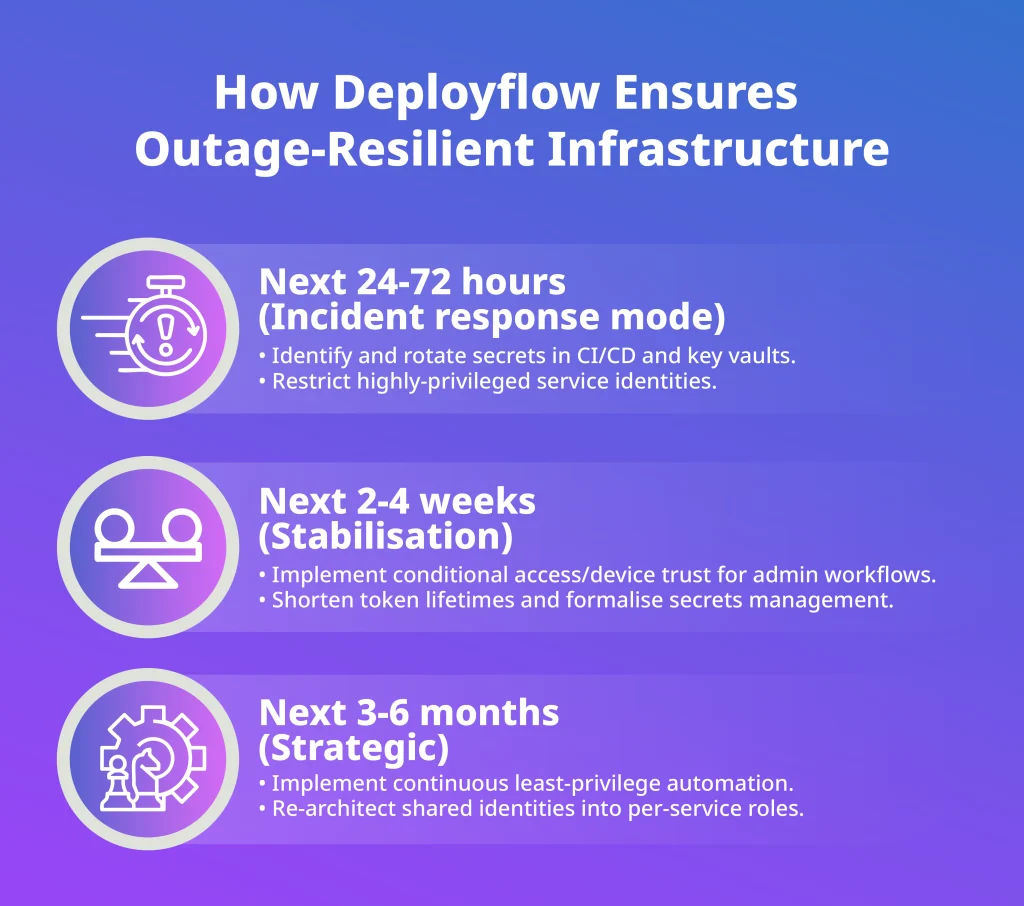
Start by reviewing identity permissions and service principals, not just user accounts. Look for identities with broad or unused permissions, especially those tied to CI/CD pipelines, automation tools, and third-party integrations. Any identity that can access key vaults, repositories, or deployment systems should be treated as high risk until proven otherwise.
Next, enforce MFA and conditional access correctly. MFA should apply not only to human users but also to privileged actions and administrative workflows. Conditional access policies need to be strict enough to prevent token reuse from unexpected locations, devices, or workloads, rather than relying on static allowlists that attackers can bypass once credentials are stolen.
Rotate and revoke all secrets, not just user passwords, because API keys, access tokens, service credentials, and CI/CD pipeline secrets often remain valid after a password reset and can silently preserve attacker access if they aren’t reissued with tightly scoped permissions.
Finally, audit token lifetimes and access scopes across cloud services. Long-lived tokens dramatically increase exposure by allowing attackers to remain undetected for extended periods. Reducing token validity, tightening scopes, and monitoring token usage patterns help shrink the window of opportunity for silent exploitation.
These actions require coordinated visibility across identity, cloud platforms, and delivery pipelines. For many organisations, this is where structured cloud security capabilities (focused on identity governance, continuous monitoring, and controlled remediation) become essential to moving from reactive response to sustained risk reduction.
If building an identity-first operating model in-house isn’t realistic right now, Deployflow’s cloud security service helps teams understand their existing identity sprawl, put clear guardrails in place, and enforce them consistently across environments.
Why Shai-Hulud 2.0 Forces a Rethink of Cloud Security Strategy
Shai-Hulud 2.0 makes one thing clear: short-term fixes are not enough when identity sits at the centre of cloud operations.
Preventing repeat incidents requires structural controls that change how access is designed, monitored, and owned across the cloud environment.
Zero Trust must be applied to identities. Trust should never be implicit simply because a request originates from a known workload, pipeline, or cloud service. Every identity interaction needs explicit verification, context awareness, and continuous evaluation, even when traffic stays entirely inside the cloud.
Least-privilege enforcement has to work at scale. Static permission reviews and annual audits cannot keep up with dynamic cloud environments. Permissions must be continuously evaluated, automatically right-sized, and adjusted as workloads, pipelines, and teams evolve, without relying on manual cleanup.
Continuous identity monitoring becomes a core security function. Instead of focusing only on events, organisations need ongoing visibility into how identities behave over time. This includes tracking privilege changes, access patterns, unusual token usage, and identity drift across services, allowing risk to be detected before it becomes an incident.
Security ownership must be embedded into DevOps workflows. Identity controls, permission boundaries, and access reviews should be part of how systems are built and deployed. When security becomes a shared responsibility inside delivery pipelines, cloud environments remain resilient even as they scale and change.
These controls shift cloud security strategy away from reactive defence and toward durable protection, one that recognises identity as the foundation of modern cloud security, not an afterthought.
Building resilience at this layer requires more than incident response; it depends on how cloud security resilience is engineered across identity, access controls, and delivery pipelines, long before an alert fires.
Why This Microsoft Defender Security Warning Is a Turning Point
This Microsoft Defender security warning confirms a shift security leaders have been seeing for years: cloud breaches are no longer isolated failures, but ecosystem-level events driven by identity abuse.
The scale of this shift is reflected in industry data. According to Palo Alto Networks’ Unit 42 research, identity-based attacks are now the fastest-growing cloud threat category, with a majority of cloud incidents involving compromised credentials or abused access paths rather than exploited infrastructure flaws.
The security focus is changing. Infrastructure hardening, patching, and network controls still play a role, but they no longer determine how far an attacker can go.
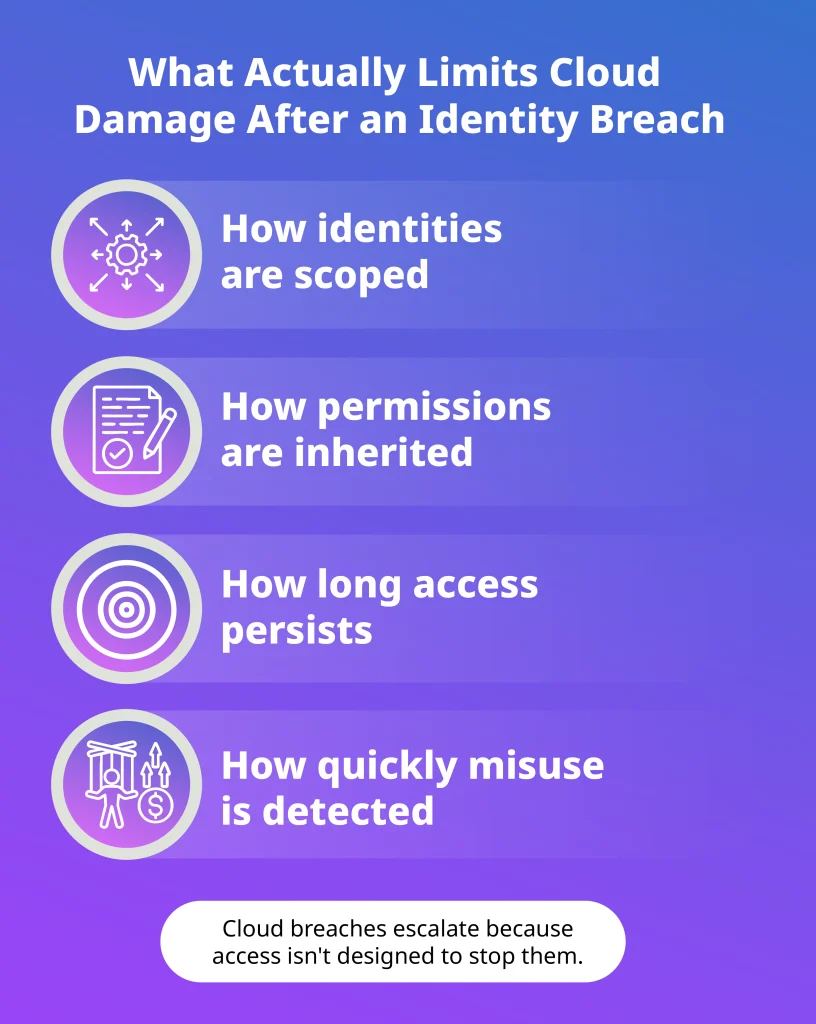
Identity governance now defines the blast radius: how access is granted, how trust is inherited, and how quickly abuse is detected across services, pipelines, and platforms.
Shai-Hulud 2.0 also exposes the limits of reactive security. Alerts that fire after credentials are stolen or secrets are exfiltrated don’t stop lateral movement that happens through legitimate access paths.
Cloud security must be designed proactively, with identity controls, trust boundaries, and continuous oversight built in from the start.
Treating this as just another Microsoft Defender warning misses the point. The cloud security crisis is a present reality, driven by identity-first threats that exploit trust at scale and punish environments built for speed without governance.
Turning Insight Into a Defensible Cloud Operating Model
The real lesson from Shai-Hulud 2.0 is exposure created by normal operations. Cloud platforms failed because security was never translated into an enforceable structure across identities, environments, and delivery paths.
This is where many organisations struggle. They know what should be secured, but lack a practical way to turn policies into repeatable controls. Identity boundaries drift, environments multiply, and permissions expand faster than governance can keep up. Over time, risk accumulates quietly, not through neglect, but through growth.
Without a clear cybersecurity strategy to guide cloud decisions, growth tends to follow convenience rather than control, leaving teams reactive instead of intentional in how risk is managed.
Deployflow’s cloud security work focuses on closing that gap between intent and execution.
In regulated environments like Little Journey’s healthcare platform, security improvements came from programmatic enforcement: isolated environments, centrally governed access, and infrastructure designed so that security constraints scale automatically.
Before: Multiple environments, manual access, high deployment friction.
After (with Deployflow):
- 100% data segregation by design.
- Security compliance is baked into environment templates.
- 80% reduction in deployment time.
The same principle applies across cloud-native organisations: when security is encoded into how environments are built, and identities are granted access, it stops being something teams remember to do and becomes something the platform enforces by default.
This is usually the point where teams realise the problem isn’t a missing tool or another alerting rule. It’s the way the environment was allowed to grow in the first place. Identities multiplied, permissions accumulated, and no one had the space to step back and redesign the foundations.
Deployflow doesn’t chase incidents, but helps teams slow the spread of risk by design.
The work focuses on reshaping how access and trust are defined across the cloud, so a single compromise stays exactly that: single. Growth is expected, automation is assumed, and security is built into how environments are created and changed.
Specifically, this means helping teams:
- Draw clear identity boundaries between services, environments, and delivery pipelines
- Replace “just in case” access with roles that reflect real behaviour and ownership
- Standardise secure-by-default cloud patterns so new environments don’t repeat old mistakes
- Continuously tighten permissions as systems evolve, instead of letting them silently sprawl
For CTOs and platform teams, this is enforced through code and automation using policy-as-code, Terraform guardrails, identity analysis, and continuous checks that keep access aligned with reality as the platform changes.
If any of this sounds uncomfortably familiar, it’s usually a sign the architecture needs attention, not another control. Schedule a 30-minute cloud identity risk review to identify where trust is leaking today and what needs to change before it escalates into a broader incident.
Frequently Asked Questions About Shai-Hulud 2.0 and Cloud Security
Frequently Asked Questions About Shai-Hulud 2.0 and Cloud Security
Yes, organisations can still be impacted even if they don’t publish open-source code themselves.
Many cloud environments consume third-party packages, tools, and dependencies as part of normal development and CI/CD workflows. If those dependencies are compromised upstream, attackers can gain access indirectly through trusted build processes. This is why supply-chain risk now extends beyond code ownership to dependency governance and verification. Cloud security strategies need to account for what enters the environment, not just what is produced internally.
Does using a major cloud provider automatically protect against attacks like Shai-Hulud 2.0?
No, cloud providers secure the platform, not how identities and permissions are configured inside it.
While providers like Microsoft, AWS, and Google offer strong baseline security, responsibility for IAM design, token management, and access scope still sits with the customer. Attacks like Shai-Hulud 2.0 exploit misused trust and over-permissioned identities rather than weaknesses in the cloud platform itself. Assuming the provider handles identity security is a common and dangerous misconception.
Are developer environments and CI/CD pipelines higher risk than production systems?
Yes, development and CI/CD environments are often higher risk because they prioritise speed and automation over strict access control.
These systems frequently use long-lived tokens, shared service accounts, and broad permissions to avoid friction. Attackers target them precisely because a single compromise can unlock multiple environments downstream. Securing pipelines and developer identities is now just as critical as securing production workloads.
How often should cloud identity and access permissions be reviewed?
Cloud identity permissions should be reviewed continuously, not on a fixed annual or quarterly schedule.
Cloud environments change too quickly for static reviews to remain effective, with new services, pipelines, and integrations introduced constantly. Automated monitoring, privilege drift detection, and usage-based access reviews help identify risk as it emerges. Regular reviews still matter, but they should complement ongoing visibility rather than replace it.
Explore our BLOG
Recent articles

ISO 42001 Explained: Requirements, Certification and What Your Engineering Team Must Build
ISO 42001 is the international standard that demonstrates your organisation governs AI properly, and enterprise...
read full article

Is Claude Down? Anthropic Outage: Protect Your Cloud Infrastructure
Claude went down across every surface on 29 September 2026. From 14:00 to 14:59 UTC,...
read full article

Top 10 Healthtech Companies in 2026: What Their Growth Means for AI and DevOps
Every software change that reaches a hospital has to clear regulatory, legacy system, and clinical...
read full article