


2024 will be remembered as one of the worst years for data breaches, with massive attacks like the Change Healthcare breach affecting 100 million people and Ticketmaster’s security incident impacting 40 million users. These incidents show the real, long-lasting damage that can occur when cloud security is weak—highlighting the critical need for SMBs to prioritise strong, proactive security measures now more than ever.
To mitigate the risk and avoid potential cyberattacks, companies must be agile enough to secure their existing tech footprint and prepare for the future.
In this article, we present our perspective on the security challenges companies face on their cloud journey and share the steps business leaders need to take to make progress.
Why Cloud Security is Critical for SMB Growth
Cloud security is more than just protecting your data—it’s foundational to your business’s ability to grow and scale. Without strong cloud security, you risk downtime, data breaches, and compliance issues that can damage your reputation, revenue, and long-term success.
For SMBs, managing security in-house can be tough, especially with limited resources. Outsourcing to a managed security service provider (MSSP) comes in here. By relying on experts, you get around-the-clock monitoring, threat detection, and compliance support without burdening your internal IT team.
What CTOs Need to Know
- Shared Responsibility Model: Cloud providers handle infrastructure security, but your team is responsible for securing your apps and data. This split gives you flexibility while ensuring you remain in control of your most critical assets.
- Cost-Effective Security Solutions: Managed security services let you maintain top-tier security without the hefty costs of building an in-house team. They also help ensure your business stays compliant with GDPR, HIPAA, and ISO 27001 regulations.
- Security as a Growth Enabler: A secure cloud environment reduces operational risks, boosts business agility, and builds trust with your customers. With strong security in place, you can focus on scaling your business, innovating, and meeting customer needs—without being constantly distracted by security concerns.
How SMBs Can Overcome Key Cloud Security Challenges
Cloud security issues can be a major headache for small and medium-sized businesses (SMBs). From downtime and data breaches to the risk of compliance violations, these threats can put your business at risk.
The good news is that these risks can be effectively managed with the right strategies and tools. Here’s a breakdown of the most common cloud security challenges SMBs face, along with actionable solutions that will help you stay secure and compliant.
1. Lack of Visibility & Monitoring → Prevent Downtime & Data Loss
It’s difficult to catch threats without real-time visibility before they cause damage. A lack of monitoring means your team might miss critical warning signs, resulting in downtime or data loss.
- Fix it:
Implement tools like AWS GuardDuty or Azure Security Center to automatically monitor your cloud environment. These tools provide real-time threat detection, alerting you to potential risks before they escalate. However, outsourcing to a managed security provider like Deployflow can ensure 24/7 monitoring for businesses with limited resources or expertise. They manage security operations around the clock, allowing your team to focus on growth without worrying about constant threats.
2. Identity & Access Risks → Stop Insider Threats & Account Breaches
One of the top causes of data breaches is excessive or mismanaged user access.
Whether it’s employees with too many permissions or accounts that aren’t properly monitored, improper access controls leave your business vulnerable to insider threats and account breaches. As organizations scale, identity security posture management can help continuously identify access risks, permission gaps, and potential identity-related vulnerabilities.
- Fix it:
Implement Multi-Factor Authentication (MFA) and enforce least-privilege access policies, where users only have access to the resources they absolutely need. Regularly audit user access and permissions to ensure they’re aligned with current needs. Managed services like Deployflow can help automate these processes and maintain an audit trail, ensuring that access control is always up to date without requiring constant oversight from your internal team.
3. Misconfigurations & Compliance Gaps → Avoid Costly Fines
Misconfigurations are a common issue in cloud environments, often leading to exposed sensitive data or compliance issues. These gaps can result in costly fines or damage your company’s reputation.
- Fix it:
Leverage automated compliance tools like AWS Config and Azure Policy to perform regular audits and enforce best practices. Ensure that all cloud-stored data is encrypted, whether it’s in transit or at rest. Deployflow offers cloud security solutions that help ensure your configurations are optimised and compliance is maintained, without you having to manually check every setting. Their services can automate the entire compliance process and provide you with peace of mind.
4. Cloud-Native Threats → Secure APIs & Containers
APIs and containers are key building blocks in modern cloud infrastructure but are also frequent targets for cybercriminals. Misconfigurations or vulnerabilities in these components can create serious security risks.
- Fix it:
Implement Web Application Firewalls (WAFs) to protect your APIs from common attack vectors. For containerised environments, use specialised security tools like AWS Fargate to ensure your containers are isolated and secure. Deployflow offers tailored cloud security solutions that provide API protection and container security, enabling your team to focus on building innovative products rather than dealing with security threats.

A Strategic Approach to Cloud Security: Key Principles & Best Practices for CTOs and SMBs
As a small or medium-sized business (SMB) CTO, you’re likely balancing cloud security with other responsibilities like business growth and innovation. Adopting a strategic approach that aligns with your resources and goals is the key to staying ahead of cybersecurity threats while scaling your business.
Here’s a breakdown of key principles and best practices for securing your cloud environment.
Step 1: Secure Identity and Access
Challenge: Identity and access management (IAM) is crucial for protecting sensitive data, especially as more businesses move to the cloud. Mismanagement of user identities or over-permissioned accounts can lead to breaches, insider threats, and data loss.
Tools:
- Azure AD, Okta: Ideal for identity verification, enforcing Multi-Factor Authentication (MFA), and setting conditional access policies.
- Cisco Duo, Google BeyondCorp: Perfect for enforcing device trust and continuous authentication.
Step 2: Secure Your Code and Development Processes
Challenge: Vulnerabilities in your codebase or development pipeline can lead to security risks, especially when integrating third-party dependencies or developing in a fast-paced environment.
Tools:
- Snyk, SonarQube: Automated code scanning tools to find vulnerabilities during development.
- GitHub Advanced Security / GitLab Security: Built-in DevSecOps tools for code analysis and dependency checks.
- HashiCorp Vault: Secure secrets management to protect sensitive keys and credentials.
Step 3: Automate Security in Cloud Infrastructure
Challenge: Cloud misconfigurations are one of the leading causes of security breaches. As cloud environments become more complex, managing and enforcing security policies across infrastructure is critical.
Tools:
- Terraform (with Sentinel): Infrastructure as Code (IaC) that allows you to enforce security policies across your deployments.
- AWS Config / Azure Policy / Google Cloud Security Command Center: Tools for enforcing cloud security policies and configurations.
- Falco / Open Policy Agent (OPA): Tools for runtime security and policy enforcement in Kubernetes environments.
How Deployflow Enables Cloud Security for SMBs
While these steps are critical for securing your cloud environment, they can be complex and time-consuming, especially for small teams.
As an experienced Cloud managed service provider, Deployflow helps SMBs secure their cloud infrastructure by implementing and managing these best practices with minimal disruption to your business operations.
Deployflow’s role includes:
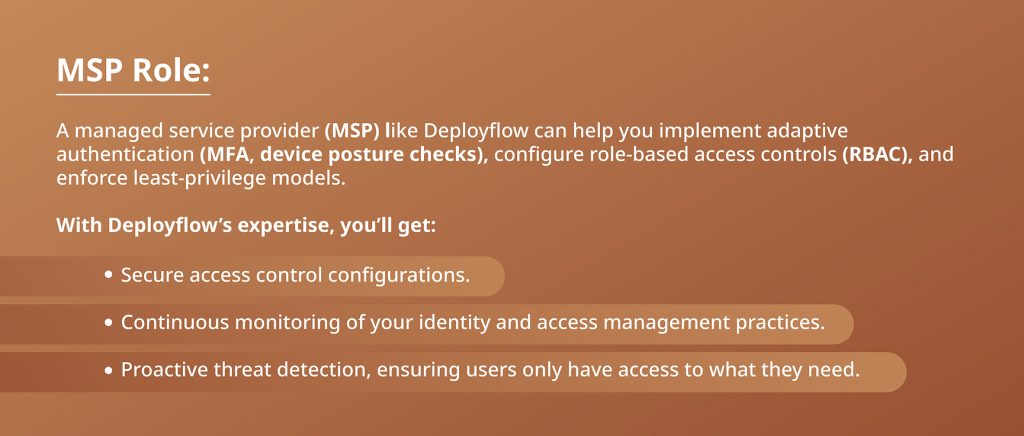
- Identity & Access Management: Help set up adaptive authentication and role-based access controls.
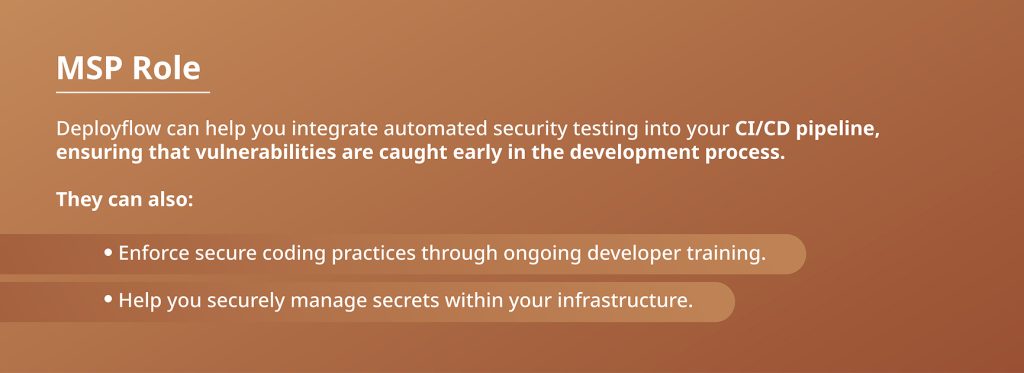
- Development Security: Integrate security into your CI/CD pipeline and enforce secure coding practices.
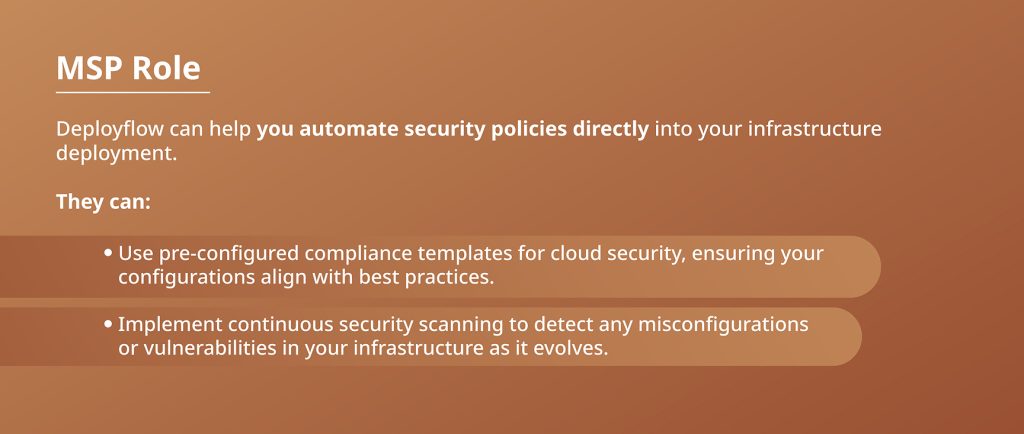
- Cloud Infrastructure Security: Automate security policies in your cloud environments and provide continuous scanning.

Safeguard Your Cloud Journey with Deployflow
Tackling these cloud security challenges requires a proactive approach, and as a busy CTO, you likely don’t have the resources to manage every security aspect in-house.
That’s where Deployflow comes in as your trusted managed service provider. They specialise in cloud security, offering 24/7 monitoring, compliance automation, and continuous threat detection tailored to the needs of SMBs.
Deployflow’s Cloud security services give you the ability to monitor your environment in real time, protect APIs and containers, and ensure that your cloud infrastructure is always compliant. With their support, you can focus on business growth, knowing that your cloud security is in capable hands.
By leveraging Deployflow cloud security services, you gain the expertise and tools needed to manage your cloud security efficiently, mitigate risks, and safeguard your business—without the complexity and overhead of handling it all on your own. Contact one of their experts to explore how they can support you on this journey.
FAQs
Explain what cloud providers vs. customers are responsible for.
Cloud providers are responsible for securing the physical infrastructure, network, and virtualisation layers, while customers are responsible for securing their applications, data, and user access.
How can businesses implement Zero Trust in the cloud?
Businesses can implement Zero Trust by enforcing strict identity verification, continuously monitoring network traffic, and segmenting access based on least-privilege principles.
Discuss multi-factor authentication, network segmentation, and continuous monitoring.
Multi-factor authentication adds an extra layer of security by requiring more than one form of verification; network segmentation limits the spread of attacks, and continuous monitoring ensures real-time detection and response to threats.
What are the best practices for securing cloud workloads?
Best practices include encrypting data at rest and in transit, automating security to reduce human error, and regularly monitoring compliance with security standards and regulations.
How can AI improve cloud security posture management?
AI improves cloud security by using machine learning to detect threats and anomalies in real time, allowing businesses to respond faster and reduce risks. AI-driven threat detection identifies patterns and potential vulnerabilities before they cause damage.
Explore our BLOG
Recent articles

ISO 42001 Explained: Requirements, Certification and What Your Engineering Team Must Build
ISO 42001 is the international standard that demonstrates your organisation governs AI properly, and enterprise...
read full article

Is Claude Down? Anthropic Outage: Protect Your Cloud Infrastructure
Claude went down across every surface on 29 September 2026. From 14:00 to 14:59 UTC,...
read full article

Top 10 Healthtech Companies in 2026: What Their Growth Means for AI and DevOps
Every software change that reaches a hospital has to clear regulatory, legacy system, and clinical...
read full article