


If you’ve ever pushed a release on Friday evening, you already know why DevOps engineers exist. They’re the ones who make sure “it worked on my machine” doesn’t turn into a Monday morning outage.
A DevOps engineer keeps the match fair. They make sure code reaches production in one piece: automated, secure, and fast.
Their day-to-day covers everything from managing pipelines and infrastructure to troubleshooting at 2 a.m. (so you don’t have to).
What we’ll explore together:
- What a DevOps engineer really is (and isn’t)
- The core responsibilities to expect from the role
- How skills and responsibilities overlap and why both matter
- When your company should consider hiring one
- What separates strong candidates from average ones
- How Deployflow helps teams put DevOps into practice
This guide breaks down DevOps roles and responsibilities so SMBs and tech leads understand what the position actually involves.
If you’ve ever struggled with release delays, ballooning cloud costs, or the dreaded late-night outage, this guide will show you why DevOps engineers are the key to fixing it.
What Is a DevOps Engineer?
DevOps engineers drive modern software delivery.
They connect developers, operations, QA, and security into a single rhythm, making sure software runs reliably in production. Their mission is to build delivery pipelines that are fast, secure, and resilient, without chaos.
DevOps Engineer Role: Balancing Process and Technology
Every successful pipeline is designed and not improvised.
DevOps engineers make that possible by blending process and technology.
They automate builds, testing, and deployments so releases are consistent and predictable. Instead of reacting to outages, they prevent them with systems that scale smoothly.
DevOps as a Culture vs. DevOps Engineer as a Job Role
Culture needs engineers to bring it to life.
While DevOps is about collaboration, automation, and shorter feedback loops, it doesn’t happen by itself. The engineer’s role is where culture becomes practice.
They write Infrastructure-as-Code, build CI/CD pipelines, and embed monitoring and security into every release. Without this role, DevOps remains an idea rather than a working system.
Why DevOps Engineers Are Critical for Modern Software Delivery
Downtime is expensive, and delivery speed is a competitive edge.
DevOps engineers protect both. They reduce release delays, lower error rates, and maintain control over cloud infrastructure.
High-performing DevOps teams recover from incidents in less than an hour, while low performers can take days (2024 DORA Report). Companies that invest in DevOps engineers ship faster, reduce risk, protect reputation, and expand with speed and reliability.
Core DevOps Engineer Job Responsibilities
DevOps engineers have a wide range of DevOps responsibilities that cover every stage of software delivery. They do a lot more than “keep the servers running.”
Here’s what that looks like in practice.
- Automation and CI/CD: Among the most important DevOps engineer tasks are setting up automated builds, managing pipelines, and ensuring deployments are reliable. DevOps engineers set up automation so code moves from commit to production with fewer manual steps and fewer errors. They build pipelines that handle testing, deployments, and updates automatically, making delivery predictable and fast.
- Monitoring and Incident Response: Things will break. The question is how quickly you notice and fix them. Managing builds and tests is just one part of the CI/CD pipeline responsibilities. DevOps engineers also monitor performance and ensure each stage runs smoothly. They make sure teams have the right visibility by setting up dashboards, alerts, and logs. When something goes wrong, they lead the response: finding the issue, fixing it, and learning from it so it doesn’t happen again.
- Security and Compliance: Security can’t be an afterthought. DevOps engineers embed checks directly into pipelines so vulnerabilities are caught early. They enforce access controls, automate compliance tasks, and make sure every release is secure by design, saving time on audits and avoiding costly mistakes down the road.
Compliance goes directly into delivery squads means it becomes part of the process instead of a roadblock. This approach allows teams to launch products securely and on time, as shown in our post on sprint-based compliance.
- Cloud and Infrastructure Management: Modern systems live in the cloud, and DevOps engineers are the ones who keep that cloud in order. They manage environments across AWS, Azure, or Google Cloud, using Infrastructure-as-Code to ensure everything is consistent and repeatable. They also run container platforms like Kubernetes to keep applications scalable and efficient.
- Troubleshooting and Root Cause Analysis: When downtime strikes, DevOps engineers step in fast. They know where to look, how to roll back safely, and how to apply fixes without creating new issues. Their goal isn’t just to get systems back online, but to find the real cause so it won’t happen again.
The financial impact of downtime is impossible to ignore. In the UK alone, the average cost of IT downtime reaches £212,000 per incident (Bandicoot). For growing businesses, that number is a reminder that reliable delivery pipelines are directly tied to resilience, revenue, and customer trust.
- Collaboration and Culture: DevOps is teamwork. DevOps engineers bring developers, testers, and operations together around shared processes. They break down silos, improve communication, and make sure everyone is working toward the same outcome: delivering features that actually work for users.
A DevOps engineer is the architect of modern delivery. They weave together automation, monitoring, security, and collaboration into one system that helps companies ship software faster, safer, and with far less chaos.
None of this happens without the right DevOps tools and automation, from CI/CD automation services to observability stacks and IaC frameworks.
Skills vs Responsibilities: What Sets Great DevOps Engineers Apart
This section highlights the DevOps engineer skills that make someone effective, and how those skills translate into everyday responsibilities.

What DevOps Engineers Are Not Responsible For
It’s easy to assume a DevOps engineer is a catch-all role, but that leads to frustration on both sides. To work with them effectively, it helps to know what’s not on their plate:
- They don’t write core application logic. That’s the responsibility of developers. DevOps engineers make sure the code moves safely and quickly into production, but they’re not the ones building your product features.
- They aren’t full-time security analysts. While security is part of their job, they focus on integrating checks and controls into pipelines. Deep threat modelling or forensic investigations fall under a dedicated security team.
- They don’t manage projects end-to-end. DevOps engineers collaborate closely with project managers and team leads, but their role is to keep delivery running smoothly, not to own the entire project schedule.
When Do You Need a DevOps Engineer in Your Team?
Not every company hires a DevOps engineer from day one, and that’s fine. But as soon as software delivery starts slowing you down, the absence of DevOps becomes impossible to ignore.
Here are the tell-tale signs that it’s time to bring one in:
- Infrastructure complexity is outgrowing manual management. Spinning up servers by hand or keeping track of configs in spreadsheets works early on. But once environments multiply across staging, testing, and production, you need Infrastructure-as-Code and automation to avoid costly errors.
- Deployments are unreliable or delayed. If releases break often, take hours of downtime, or force teams into weekend “fire drills,” that’s a sign you need CI/CD pipelines and automated rollbacks, work that falls squarely on a DevOps engineer’s shoulders.
- Cloud costs are spiralling. As apps scale, so do cloud bills. A DevOps engineer helps optimise usage, eliminate wasted resources, and implement monitoring to keep costs predictable.
- Teams are working in silos. Developers, QA, and ops all pulling in different directions slows everything down. DevOps engineers align processes and build shared workflows, so collaboration happens by design rather than by chance.
When delivery slows and silos drag teams apart, it’s tempting to think the problem is unique to your company.
It’s not. The global DevOps market is projected to leap from $10.4 billion in 2023 to $25.5 billion in 2028 (Spacelift), meaning that businesses everywhere are facing the same tipping point.
The ones investing now are building an advantage that compounds with every release.
Why the Timing Matters
The inflexion point usually comes when a business shifts from startup mode to scale-up mode.
What once worked (manual processes, ad-hoc deployments, and “just make it work” culture) starts to cause real problems. At this stage, hiring a DevOps engineer prevents delays from turning into business risks and gives your teams the tools they need to deliver faster.
The demand for DevOps talent in the UK is only accelerating.
The UK DevOps market was valued at USD 479.7 million in 2024, and it’s projected to grow at a CAGR of nearly 13% through 2035 (Market Research Future).
For businesses, this signals a clear shift: DevOps is becoming a cornerstone of competitive IT strategy.
The Sprint-Based Model Advantage
At Deployflow, we’ve seen many growing companies hesitate:
“Do we need a full-time DevOps hire yet?”
At that stage, a sprint-based model becomes the smarter choice. Instead of adding overhead, you get DevOps expertise in focused delivery sprints.
Benefits of the Sprint-Based DevOps Model
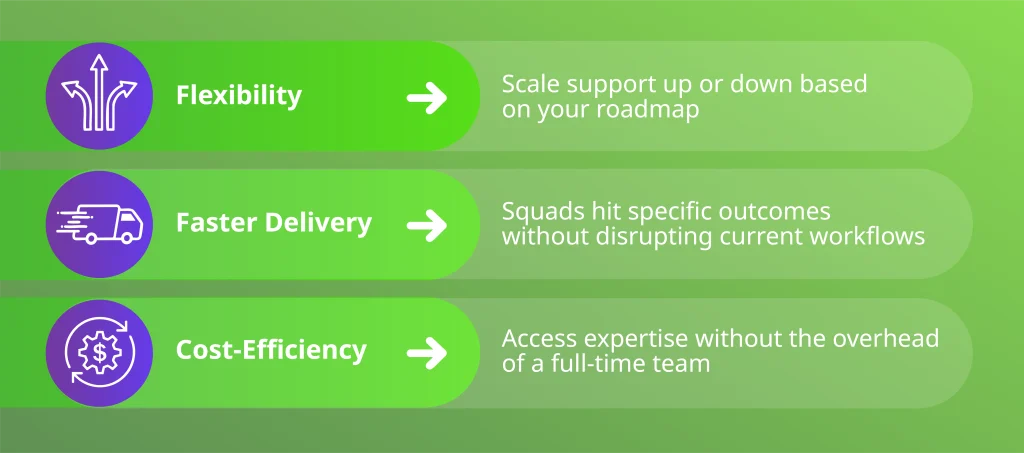
If your teams are fighting fires more than shipping features, it’s time to bring in DevOps. Whether as a hire or through a sprint-based partnership, the right model keeps delivery smooth, cloud costs under control, and scaling on track.
What to Look for When Hiring a DevOps Engineer
Think of this section as a practical DevOps job description: the mix of technical expertise and collaboration skills that define a strong hire.
A great DevOps engineer is both technically skilled and knows how to collaborate across teams and keep delivery moving.
When you’re hiring, look for:
- Cloud expertise: someone who’s comfortable running workloads on AWS, Azure, or Google Cloud.
- Automation know-how: experience with CI/CD tools like Jenkins, GitLab CI, or GitHub Actions to streamline builds and deployments.
- Team player mindset: strong communication skills to keep dev, ops, and QA aligned.
- Infrastructure-as-Code skills: hands-on knowledge of Terraform, Ansible, or similar tools to build scalable, consistent environments.
- Security awareness: the ability to bake access controls and security checks into every release, not add them as an afterthought.
When UK real estate disruptor Strike needed to move faster in a heavily regulated market, they turned to Deployflow’s DevOps engineers. By introducing Infrastructure-as-Code and embedding compliance into delivery pipelines, Strike cut compliance preparation time and gained the ability to release updates quickly without added risk.
A similar challenge was faced by fintech company Zilch, where rapid growth meant that speed and compliance had to stay perfectly aligned. Through Deployflow’s sprint-based DevOps model, Zilch tapped into engineers skilled in cloud automation, CI/CD automation services, and IaC. The result was a delivery process that was not only faster but also fully audit-ready, allowing the company to scale confidently in a tightly regulated space.
Why Work With Deployflow’s DevOps Engineers
Deployflow is a UK-based team built around one focus: making software delivery faster, safer, and more reliable.
Sprint-based engineering squads helped companies like Vodafone, TCN, Little Journety, Hall Hunter, Berry Makers, PI Concept, Strike, Zilch, and many others cut compliance preparation, tighten release cycles, and scale without the usual chaos.
Our engineers don’t just hand over a pipeline and walk away. They stay engaged, improving systems over time and keeping delivery aligned with business goals.
Hiring DevOps engineers is about proving tangible business value. As we explain in our blog on measuring DevOps ROI, delivery squads can reduce waste, accelerate releases, and directly impact revenue growth.
See how our DevOps Managed Services can transform the way your teams build, release, and scale.
And if you need broader operational coverage, our IT Managed Support helps that your infrastructure runs smoothly around the clock.
DevOps Engineers: The Difference Between Chaos and Growth
Every company hits a point where delivery speed clashes with stability. That’s exactly the moment when DevOps engineers make the biggest difference.
They keep systems running and create the frameworks that let teams release often, recover fast, and stay secure.
For a startup, this role prevents growth from collapsing under its own weight.
For a scale-up, it unlocks the ability to move faster than competitors without burning out teams.
A mature DevOps practice transforms launches from stressful milestones into everyday wins.
Frequently Asked Questions About DevOps Engineers
What is included in a DevOps job description?
A DevOps job description usually combines both technical and cultural responsibilities.
On the technical side, it covers automation, CI/CD pipeline management, Infrastructure as Code, monitoring, and embedding security into delivery.
On the cultural side, it emphasises collaboration between developers, operations, and QA. Companies often adjust the description depending on whether they need faster releases, tighter compliance, or scalable infrastructure.
What are the most important DevOps engineer skills?
The most in-demand DevOps engineer skills include:
- Cloud expertise — working across AWS, Azure, or Google Cloud.
- Automation and CI/CD — experience with Jenkins, GitLab CI, or GitHub Actions.
- Infrastructure as Code — using Terraform, Ansible, or similar tools.
- Monitoring and observability — building dashboards, alerts, and incident response systems.
- Collaboration and problem-solving — aligning dev, ops, and QA teams around one delivery model.
This mix ensures DevOps engineers can improve delivery systems rather than just operate tools.
What are typical CI/CD pipeline responsibilities?
CI/CD pipeline responsibilities include setting up workflows that build, test, and deploy applications automatically. DevOps engineers also integrate security scans, manage rollbacks, and ensure releases are auditable and reliable. By handling these tasks, they reduce deployment times from hours (or days) to minutes and keep failures from reaching production.
How do DevOps roles and responsibilities change as a company grows?
At the startup stage, DevOps roles and responsibilities are broad. One engineer may handle automation, monitoring, and cloud cost optimisation.
As the company scales, responsibilities become more specialised: one group may own Infrastructure as Code, another focuses on observability, and another on compliance automation.
In larger organisations, DevOps engineers build frameworks that let multiple teams ship faster and more securely at scale.
Explore our BLOG
Recent articles

ISO 42001 Explained: Requirements, Certification and What Your Engineering Team Must Build
ISO 42001 is the international standard that demonstrates your organisation governs AI properly, and enterprise...
read full article

Is Claude Down? Anthropic Outage: Protect Your Cloud Infrastructure
Claude went down across every surface on 29 September 2026. From 14:00 to 14:59 UTC,...
read full article

Top 10 Healthtech Companies in 2026: What Their Growth Means for AI and DevOps
Every software change that reaches a hospital has to clear regulatory, legacy system, and clinical...
read full article