


Imagine this: You’re onboarding two new hires on a Monday morning. They’re eager to start—laptops are fresh out of the box. But within 15 minutes, one machine won’t boot, and the second can’t connect to the network. You call your MSP’s remote helpdesk. They log in. They poke around. They escalate. You’re told someone might be able to come out later this week.
Then you realise you’re about to spend the next two hours crawling under desks and fiddling with Ethernet cables.
Sounds familiar?
We’ve heard this story before a lot. From failed hardware setups to mystery network issues, some problems simply can’t be fixed over Zoom or remote desktop.
And it’s not just about tech it’s about time. Your ops team is stretched thin already. They weren’t hired to be IT specialists, and yet they’re constantly pulled into things like BIOS errors or cabling puzzles no one remembers setting up.
One of the biggest benefits of working with a managed service provider (MSP) is their ability to troubleshoot and resolve countless IT issues remotely.
While remote IT support is efficient and convenient, there are situations where a physical presence is non-negotiable. Whether it’s a significant hardware failure or a complex system integration, some challenges demand hands-on expertise.
This article walks you through key IT issues that require on-site IT support and how partnering with the right team, one that’s local, responsive, and genuinely embedded in your business can save you time, stress, and money.
MSP Accountability Gap: Why Presence Still Matters
You’ve been there, logging a support ticket, chasing updates, looping in operations, and hearing the same response: “We’re looking into it.” But hours later, your team is still stuck, and no one’s physically shown up to take charge.
This is what we call the accountability gap. And it’s one of the most frustrating realities of remote-only IT support.
For CTOs, this gap doesn’t just slow down incident resolution, it erodes trust across your business.
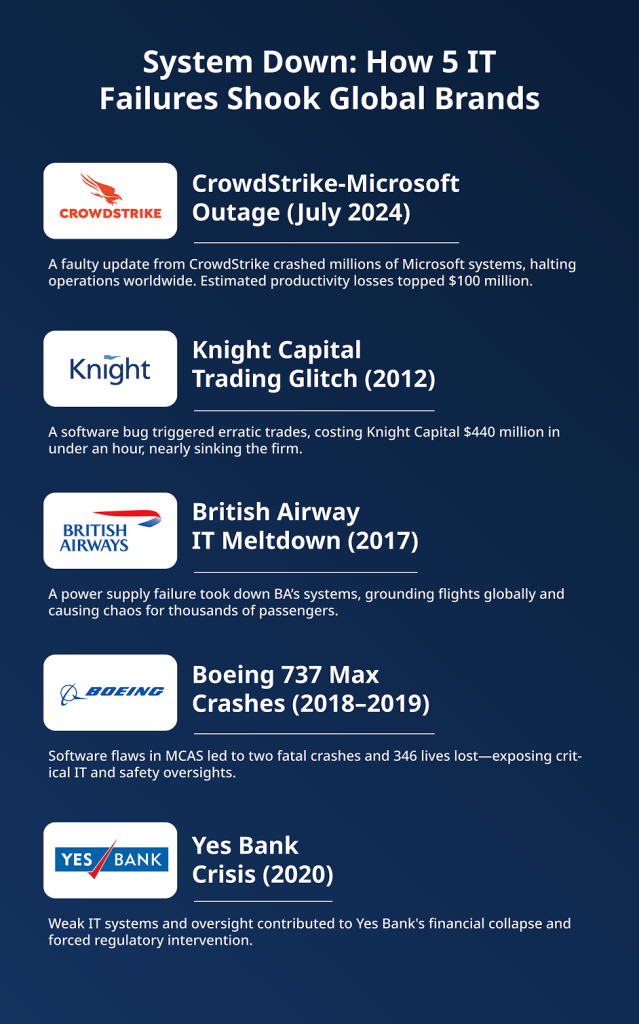
You’ve invested in an MSP to act as an extension of your team, but instead, they’re operating like a helpdesk vendor. Tickets pile up. Statuses change. But problems linger.
It’s not that remote support doesn’t have value. For many day-to-day issues, it’s efficient. But when things go wrong, really wrong, you need someone who can actually be there. You need a partner who takes ownership and solves problems end-to-end, not just logs them and escalates.
As one of our clients put it perfectly:
“We just want someone to show up when it matters.”
Reactive vs Proactive Support
Also, remote setups tend to lean reactive, fixes come after issues have already disrupted your workflow. But on-site support is where proactive service comes to life. A technician in your space can spot loose connections before they become outages, help with structured cabling, ensure hardware is deployed correctly, and build relationships with your ops and non-tech teams.
And that’s a big one: your ops staff isn’t technical. When there’s no one physically present, their frustration grows, and your internal IT reputation takes a hit.
With the right partner like Deployflow on-site support bridges this accountability gap. It brings visibility, builds trust, and puts a face to your tech team. It means your non-technical staff feels supported, and your operations don’t grind to a halt.
Don’t underestimate the power of showing up in a world celebrating remote everything.
Hybrid IT Support: Get the Best of Both Worlds
When it comes to IT services and support today, businesses need more than just quick fixes, they need flexibility. Hybrid IT support is a smarter way of working: remote-first support for the day-to-day, with on-site IT support whenever you really need someone there in person.
It’s agile, it’s efficient, and it’s built for the way modern businesses operate.
What Exactly Is Hybrid IT Support?
Think of it as your everyday safety net, always there remotely to keep things running—and your on-the-ground team for moments when a physical presence makes all the difference.
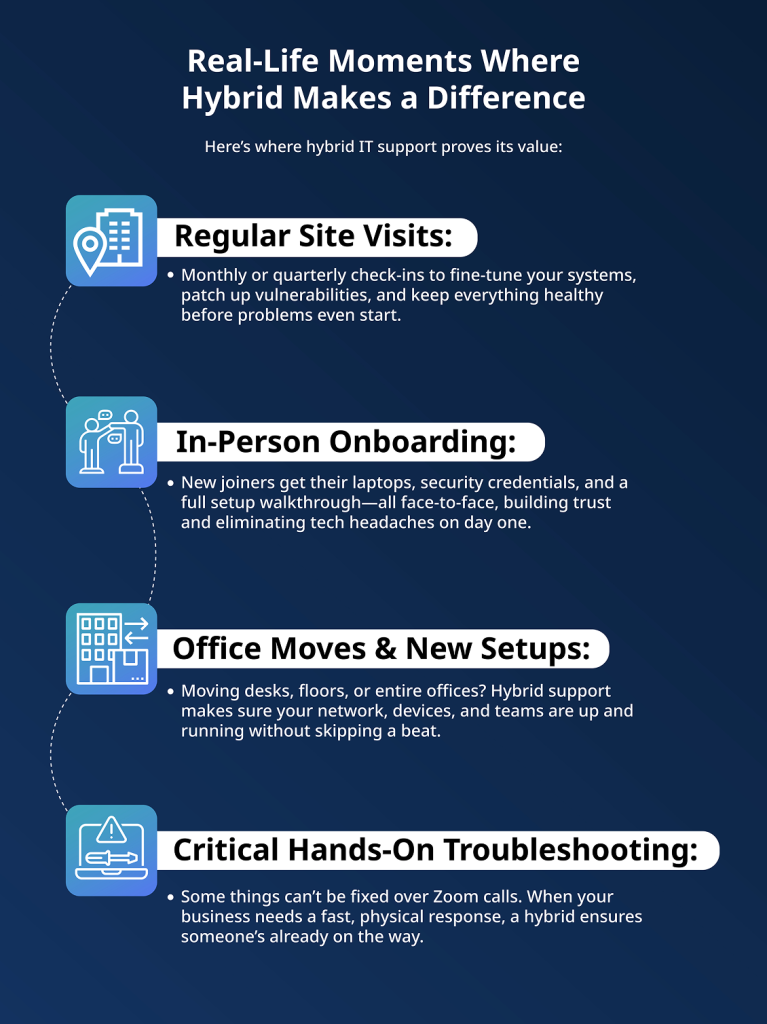
Most issues? Resolved in minutes online. Bigger challenges—like hardware installs, network issues, or office moves? They are done on-site.
Real-Life Moments Where Hybrid Makes a Difference
Hybrid IT Support: Smarter, Leaner, More Affordable than You Think
There’s a lingering myth: on-site IT support is too expensive for most businesses to justify. But in reality? That idea’s outdated.
Hybrid IT support gives you exactly what you need, without overcommitting your resources. It’s cost-effective, agile, and designed for modern businesses’ operations.
Let’s Talk About the Cost Myth
On-site support used to mean hefty travel fees, longer lead times, and sometimes even full-time hires just to handle a few in-person needs. But with hybrid support, those days are gone.
Here’s how it works:
Remote support handles the day-to-day, fast, efficient, and always on. Then, when physical presence is actually needed (think: hardware installs, network upgrades, or high-touch troubleshooting), you bring in experts on the ground and only when it adds real value.
You’re not paying for on-site presence 24/7. You’re paying for availability, not permanence—and that’s a much smarter investment.
Downtime Is Expensive. Hybrid Minimises It.
We don’t need to tell you how painful downtime can be—but just for context, Delta lost $150 million during a five-hour system outage. Most of us don’t have margins that wide.
Here’s how hybrid IT support helps you stay ahead:
- Proactive Monitoring: Always-on remote monitoring spots issues early, before they turn into big problems.
- Rapid Remote Fixes: Most issues get resolved without anyone needing to set foot in your office.
- Strategic On-Site Support: When the situation truly calls for it, help is there—and fast.
This mix ensures fewer disruptions, faster resolutions, and a much lower risk of downtime that wrecks budgets and reputations.
What to Ask Your MSP (or Your Future One)
If you’re evaluating a current MSP or exploring a new one, asking the right questions can save you a lot of time, money, and headaches down the road.
Here are a few key questions to help you dig deeper and find a local IT support for SMBs that truly gets your business:

Speed matters—especially when something breaks that can’t be fixed remotely. Ask how quickly they can be on-site in your specific locations. Whether it’s 4 hours or the next business day, you want clarity on their SLAs for in-person support.
Why it matters: Downtime is expensive. Knowing that on-site IT support UK can show up fast when it counts keeps your risk profile in check.

Continuity builds trust. Ask whether they assign dedicated technicians or a rotating cast. Having familiar faces means less ramp-up time, a better understanding of your systems, and smoother interactions overall.
Why it matters: A consistent team doesn’t just troubleshoot—they start thinking strategically with you.

Ticket closure is a basic metric, but you want a partner who goes further. Ask how they track service quality, user satisfaction, and long-term performance improvements.
Why it matters: You’re not just solving problems but optimising IT. That takes smarter metrics and shared goals.

Flexibility is key. A solid MSP should offer hybrid models that scale with your business, so you’re not overpaying for full-time on-site presence when remote support gets the job done 90% of the time.
Why it matters: You get the right support at the right time, without wasting resources.
IT Support Should Work the Way You Do
Let’s be clear, you’re not asking for too much. Wanting fast, reliable support aligned with your business’s operations isn’t unreasonable. It’s essential.
The truth is, the old models of IT support—either fully in-house or 100% outsourced—often miss the mark. One is expensive and hard to scale, and the other can feel disconnected.
On the other hand, hybrid IT support offers the presence when you need it, the consistency your team values, and the flexibility your budget demands. No slow response times. Just smart, scalable support that adapts to your business—not the other way around.
Whether you’re managing a growing internal team, modernising legacy systems, or simply tired of chasing down support for every small issue, hybrid support gives you the best of both worlds—without the compromise.
Let’s Make IT Feel Human Again
It’s time to rethink what IT support can be.
Ready to see the difference? Let’s chat.
We’ll walk you through what a tailored hybrid support model could look like for your business—real people, smart tech, consistent service, and full transparency. We’ll show you how hybrid Managed IT support services can work for your team, without breaking the budget or slowing down your momentum.
In the meantime, check our IT managed services to learn how we can help your business run smoothly.
Explore our BLOG
Recent articles

ISO 42001 Explained: Requirements, Certification and What Your Engineering Team Must Build
ISO 42001 is the international standard that demonstrates your organisation governs AI properly, and enterprise...
read full article

Is Claude Down? Anthropic Outage: Protect Your Cloud Infrastructure
Claude went down across every surface on 29 September 2026. From 14:00 to 14:59 UTC,...
read full article

Top 10 Healthtech Companies in 2026: What Their Growth Means for AI and DevOps
Every software change that reaches a hospital has to clear regulatory, legacy system, and clinical...
read full article