



One cyber attack, system crash, or compliance misstep is all it takes to bring your operations and reputation to a halt. UK SMBs are more exposed than ever, yet most still lack a solid resilience plan.
This guide lays out exactly how to build an enterprise IT resilience strategy without enterprise-level costs, using tools and strategies already available.
Inside, you’ll discover:
- What enterprise-grade IT resilience means and why your business can’t afford to ignore it
- The top risks threatening UK SMBs today, from cybercrime to supplier outages
- Cost-effective ways to copy big-player strategies on a lean budget
- How managed services can actually reduce your IT spending while keeping you secure
- A clear, practical roadmap to build smarter, stronger systems that can weather any storm
This is your playbook for protecting your business, keeping your clients’ trust, and staying operational no matter what comes next.
What Is Enterprise IT Resilience?
Enterprise IT resilience is the ability of an organisation’s technology systems to recover from disruptions quickly, maintain operations, and adapt to future risks.
To operationalise this mindset, businesses should define clear performance thresholds. That means knowing how to measure IT resilience in practical terms, not just in theory. When systems are stressed, it’s these internal benchmarks that help teams react with clarity and speed.
For example, an organisation with strong IT resilience and recovery protocols might restore operations within minutes after a system failure, instead of days.
How Corporations Safeguard Operations with High-Budget Strategies
Large enterprises often invest heavily in:
- Global data centre redundancy
- Bespoke cybersecurity programmes
- Dedicated disaster recovery (DR) teams
- In-house DevOps and security analysts
- Real-time monitoring with AI-based threat detection
These strategies are robust, but also expensive.
Why SMBs Can’t Afford to Ignore This Topic
Enterprise tools may be expensive, but the cost of inaction is greater. Data loss, downtime, and reputational damage can stall growth. Clients and regulators now expect resilience as standard. Without it, downtime and data loss aren’t just technical issues but business risks.
Common Vulnerabilities Facing UK SMBs Today
From evolving threats to economic uncertainty, UK SMBs must contend with:

Lessons from High-Profile IT Failures: What UK SMBs Can Learn
IT disasters don’t just happen to small businesses; they’ve brought down major supermarkets, luxury brands, and national services. That doesn’t mean SMBs can ignore warning signs. In fact, smaller companies with tighter budgets often face higher risks when similar problems arise.
Here are three real-life examples of major UK organisations facing IT crises, serving as critical warnings to SMBs to strengthen their IT resilience plan before they’re caught off-guard:
- How a Single Software Glitch Brought UK Healthcare, Airports, and Retail to a Standstill:
In July 2024, a faulty software update from cybersecurity firm CrowdStrike triggered a massive IT outage across the UK, exposing the risks of relying on outdated or poorly managed systems.
GP surgeries couldn’t access patient records or book appointments, pharmacies were unable to process prescriptions, and airports had to switch to manual check-ins, causing hundreds of flight delays and cancellations. Even retailers and payroll systems went down, disrupting card payments and employee salaries.
This incident shows how a single misstep in IT management can cripple essential services nationwide, proving that resilience is not a luxury, but a necessity.
- Burberry’s 1,700 Job Cuts Show How Economic Shifts Can Disrupt IT Priorities:
In May 2025, British luxury brand Burberry announced plans to cut 1,700 jobs, 20% of its global workforce, to reduce costs amid declining sales and a broader slowdown in the luxury market.
While the move was framed as part of a strategic turnaround, it reflects the kind of sudden economic pressure that forces companies to slash spending, including IT and infrastructure investments.
For smaller businesses, similar shifts can disrupt digital transformation plans and leave critical systems underfunded or outdated.
- How Co-op Dodged a Ransomware Disaster While M&S Struggled to Recover:
In April 2025, UK supermarket chain Co-op narrowly avoided a full-blown ransomware crisis by proactively shutting down parts of its IT systems after detecting a cyber threat.
Although the attackers had already infiltrated the network, they were unable to deploy ransomware due to Co-op’s swift response.
While the incident still caused supply chain disruptions and card payment failures, Co-op recovered in weeks, unlike M&S, which suffered extended outages from a similar attack.
This case shows how rising cybercrime is targeting even well-established UK businesses and why rapid response plans are critical to limiting damage.
Enterprise IT Resilience Tactics SMBs Can Adopt Today
Even with limited budgets, SMBs can apply the same core principles used by larger enterprises. Focus on these two areas:
Core IT Practices
- Disaster Recovery as a Service (DRaaS) to quickly restore systems after disruptions
- Cloud strategy and migration to cut infrastructure costs, ensure GDPR compliance, and maintain UK data residency while avoiding vendor lock-in
- DevSecOps to embed security into every stage of development and operations
- Security and compliance to meet UK standards like GDPR and Cyber Essentials
- Infrastructure as Code (IaC) to automate infrastructure setup and scaling
- Cloud engineering to build systems that can grow with your business
To tie your strategy together, track IT resilience metrics that indicate how well recovery plans are working. This ensures your investments translate to real-world stability.
Strategic Advisory & Planning
Before implementing any major changes, it’s worth running an IT resilience audit to see where your current systems stand and where vulnerabilities lie.
- Cloud consulting to plan migrations and avoid vendor lock-in
- Technology advisory to align IT decisions with long-term business goals
Low-Cost Ways to Strengthen IT Resilience
Ditching Costly Hardware: A Cloud-Native Advantage for UK SMBs
Cut hardware costs with a smart IT resilience strategy.
Traditional IT hardware drains your funds, it eats up office space, demands constant maintenance, and can’t keep up with the pace of change. UK SMBs face high upfront costs, unpredictable repair bills, and rigid systems that struggle to scale as the business grows.
By shifting to a cloud-native model, you eliminate the burden of physical infrastructure. Instead, your IT budget goes into scalable, pay-as-you-go resources that grow with your needs. With Deployflow’s cloud management services, you get optimised performance, real-time monitoring, and agile systems — all without overloading your budget.
Beyond Manual Backups: Automated Resilience for UK Data Security
Recover quickly, stay compliant, and reduce manual work with your IT resilience plan.
Manual backups leave too much to chance. A missed step or delayed schedule can result in data loss, extended downtime, and serious GDPR violations, all of which can cripple a growing UK business. For SMBs, the risk is real: even a few hours of disruption can lead to lost revenue, damaged reputation, and regulatory fines.
Deployflow’s Recoverable platform replaces that risk with precision. It delivers fully automated, daily backups with instant restore capabilities, helping you meet strict Recovery Time Objectives (RTOs) and maintain business continuity. Your data stays encrypted, compliant, and accessible with no manual input, no hardware, and no delays.
From Chaos to Control: Cutting IT Costs with Proactive Monitoring and DevOps
Simplify your IT stack while improving visibility.
UK SMBs often rely on messy, stitched-together IT systems that are hard to manage and expensive to maintain. When something breaks, it takes too long to spot the issue, and even longer to fix it. This leads to rising support costs, repeated downtime, and constant stress on internal teams.
Deployflow solves this by setting up easy-to-manage monitoring tools and efficient DevOps practices that work in the background. Instead of waiting for things to go wrong, you get real-time alerts and automatic fixes that stop problems before they spread. This keeps your systems running smoothly, cuts support costs, and gives your team more control — all without making your setup more complicated.
Add 24/7 Support to Strengthen Your IT Resilience Audit
Detect and resolve threats before they become disasters.
When systems crash after hours or a security breach goes unnoticed overnight, the damage can escalate fast, from lost revenue and angry customers to serious compliance violations. For UK SMBs with small IT teams, these risks are even harder to manage without help.
Deployflow’s 24/7 managed support service acts as your always-on defence. With guaranteed response times and clear SLAs, issues are spotted and resolved before they spiral. Whether it’s a failed backup at 2 AM or a suspicious login attempt on a Sunday, our team steps in immediately so your team can stay focused on the day-to-day, not late-night emergencies.
Deployflow Is a Transformation Partner
When Little Journey, a growing digital health platform, needed to scale securely and meet strict medical regulations, they trusted Deployflow. Our team reduced deployment time by 80%, cut manual work by 70%, and ensured 100% data segregation with a secure, automated infrastructure built on Terraform.
The result? Stronger compliance, greater efficiency, and a platform that’s ready to scale.
If you’re facing similar growth or security challenges, Deployflow is here to help you move faster and safely.
Talk to us about streamlining your backups and recovery. Our experts can help you build a faster, simpler, and more resilient solution without the hardware headache.
Leveraging Managed IT Services for Scalable Protection
Benefits of Outsourcing IT for SMBs
Outsourcing brings key advantages that help SMBs boost performance while keeping costs under control:
Access Enterprise-Grade Power Without the Price Tag
Outsourcing IT gives UK SMBs access to high-end tools and support, without the need for enterprise budgets. Platforms like AWS, Azure, and advanced security suites such as CrowdStrike and Datadog become affordable through managed service providers like Deployflow, which offer them as part of bundled, cost-effective solutions.
Focus Your Resources Where They Matter Most
Hiring, training, and retaining specialised IT talent is expensive and time-consuming. Outsourcing removes that burden, allowing you to channel your budget and energy into growing the business, not running an internal IT department.
Stay Protected 24/7 Outside Office Hours
Disruptions don’t wait for 9 to 5. Cyber attacks, system failures, and data issues often strike outside working hours, when in-house teams are offline. Deployflow’s round-the-clock monitoring and rapid response services help prevent issues before they cause damage, ensuring business continuity and peace of mind.
Reclaim Time for Growth, Not Firefighting
Instead of putting out IT fires, UK SMB owners and their teams can focus on what moves the business forward: launching new products, serving customers, and scaling operations. With a trusted partner handling the backend, your internal resources stay focused on strategy, not tech trouble.
How MSPs and DevSecOps Partners Reduce Internal Costs
By partnering with MSPs and DevSecOps experts, SMBs can streamline operations and cut internal costs in several impactful ways:
Avoid the High Cost of Security Talent
Know that training and keeping full-time cybersecurity professionals come with a high cost in the UK. On the other hand, outsourcing gives you access to expert-level security and compliance support without the ongoing salaries, onboarding time, or retention challenges.
Prevent Disruptions Before They Cost You
Proactive system management helps catch issues before they escalate into expensive problems. Whether it’s a network outage that stalls online sales or a data breach that leads to GDPR fines, these risks are managed in real time, protecting your bottom line and reducing downtime.
Simplify IT with One Trusted Partner
Instead of juggling multiple tools, vendors, and support contracts, outsourcing centralises your IT needs with a single provider. This makes things easier to manage, improves how teams work together, and cuts the extra time and money spent juggling different tools and vendors.
What to Look for in a UK-Based Managed Service Provider
The right MSP is a partner who helps your business stay secure, grow smoothly, and meet UK-specific rules. Here’s what to check for:
- Knowledge of UK Compliance Standards
Look for providers who understand Cyber Essentials and GDPR. These aren’t just boxes to tick; they help you avoid costly fines, protect customer data, and build trust with clients, partners, and regulators. - 24/7 Support and Fast Incident Response
Issues don’t wait for business hours. A strong MSP offers round-the-clock monitoring and quick response times, so problems are fixed fast, before they hurt your bottom line. - Experience with Leading Cloud Platforms
Choose a provider who works across major platforms like AWS, Azure, and Google Cloud. This gives you more flexibility and makes it easier to switch or scale as your needs change. - A Partner That Grows with You
Your MSP should adapt as your business evolves, whether you’re adding remote teams, launching new products, or opening new locations. Scalability and flexibility are key.
Final Thoughts: Building Resilience Without Enterprise Spend
Resilience starts with smart decisions, not big budgets. It’s about using the right tools, services, and strategies to stay strong and agile, no matter your size.
Here’s what you can take away from this guide:
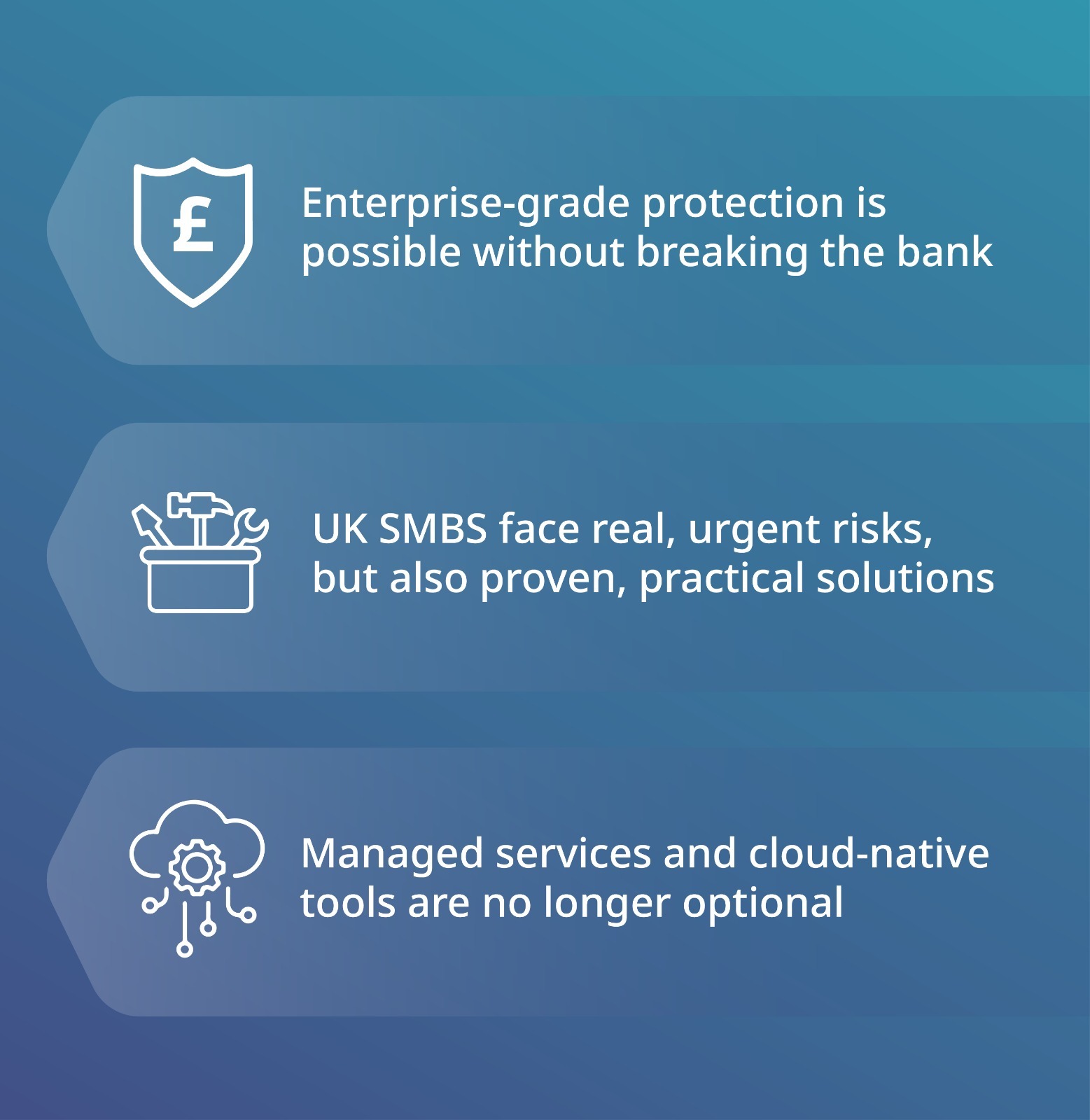
Don’t wait for a disruption to expose the gaps. Find out where your systems are vulnerable, book a fast, free IT resilience audit with Deployflow for a quick check, and see where your systems stand.
Frequently Asked Questions
How do you measure IT resilience?
IT resilience is measured by how quickly and effectively systems can bounce back from disruptions. Key metrics include recovery time objectives (RTO), recovery point objectives (RPO), system uptime, and incident response times.
You’re not alone. If you’re unsure how your current setup measures up, a quick audit can highlight where improvements are needed.
What’s the difference between IT resilience and disaster recovery?
Disaster recovery is just one piece of the puzzle. IT resilience takes a broader view: it’s about prevention, adaptability, and continuity. It includes disaster recovery, proactive planning, real-time monitoring, and systems that stay operational even under stress.
Think of it as moving from reactive to resilient.
What is an IT resilience plan?
An IT resilience plan is your roadmap for staying operational during a crisis. It includes everything from data backup and failover systems to clear response protocols and regular testing.
The goal? Confidence. When disruption hits, you know exactly what happens next and who’s responsible for making it work.
Who is responsible for IT resilience in a small business?
While leadership usually sets the direction, IT resilience is a shared responsibility across operations, security, and technology teams. For many SMBs without large IT departments, this can feel overwhelming.
Deployflow, as your strategic partner, helps build, monitor, and optimise your resilience strategy so you don’t have to manage it alone.
Explore our BLOG
Recent articles

ISO 42001 Explained: Requirements, Certification and What Your Engineering Team Must Build
ISO 42001 is the international standard that demonstrates your organisation governs AI properly, and enterprise...
read full article

Is Claude Down? Anthropic Outage: Protect Your Cloud Infrastructure
Claude went down across every surface on 29 September 2026. From 14:00 to 14:59 UTC,...
read full article

Top 10 Healthtech Companies in 2026: What Their Growth Means for AI and DevOps
Every software change that reaches a hospital has to clear regulatory, legacy system, and clinical...
read full article