


In 2024, a leak of 16 billion stolen credentials surfaced online, compiled from years of breaches, infostealer logs, and unsecured databases.
Unlike isolated incidents, this data dump affected platforms like Google, Facebook, and LinkedIn and gave attackers a ready-made toolkit to exploit reused passwords and misconfigured cloud access.
This kind of breach doesn’t happen because of a single platform failure. It happens when companies lack operational control over credentials, identity management, and cloud infrastructure.
That’s why more businesses are investing in a Cloud Operations Engineer, a role focused on keeping cloud environments secure, resilient, and under control.
The breach exposed sensitive customer data, including credit scores and banking details, and was traced back to a flaw in the company’s cloud infrastructure. What failed was the lack of operational control.
This incident is a great example of why more companies are investing in Cloud management engineers. This role ensures that cloud infrastructure is functional, secure, cost-efficient, and resilient, protecting both technical integrity and business continuity.
In this guide, you’ll learn:
- What a Cloud Operations Engineer actually does, beyond the buzzwords
- How this role helps prevent downtime and public-facing cloud missteps
- Smart ways Cloud Ops reduces infrastructure costs and avoids overprovisioning
- How they support secure, efficient collaboration across distributed teams
- Why their role is key to compliance, audits, and long-term scalability
Cloud complexity is growing fast. Without a dedicated Cloud Operations Engineer, teams miss critical gaps, which can lead to outages, increased costs, or failed audits. This article breaks down the clear business case for making Cloud Ops a priority.
What Is a Cloud Operations Engineer?
A Cloud Operations Engineer keeps cloud infrastructure running smoothly, securely, and cost-effectively, ensuring systems stay online and scale with demand.
Key responsibilities include:
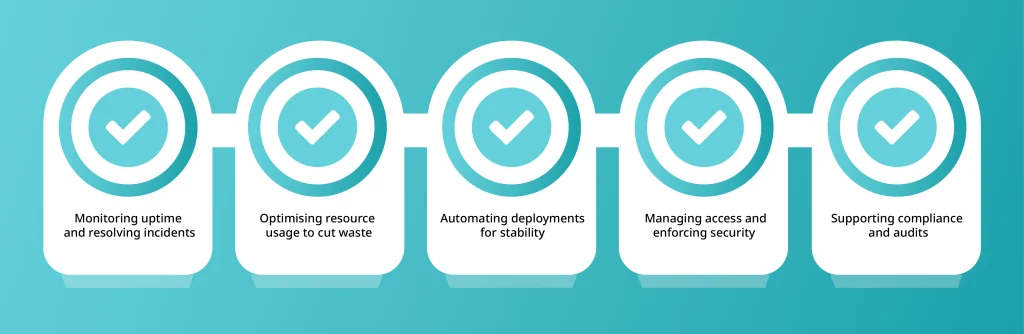
They typically work with AWS, Azure, or GCP, and are critical in industries like FinTech, HealthTech, SaaS, and Media, where downtime hits revenue and trust.
How Cloud Operations Engineers Compare to Other Roles
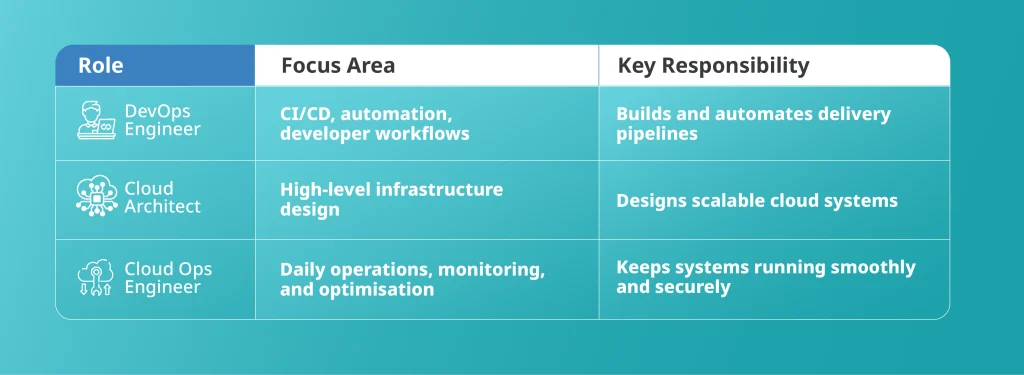
Cloud Operations Engineers maintain and optimise what others build, ensuring reliability, performance, and cost-efficiency after launch.
For teams already using automation pipelines, combining Cloud Ops with structured DevOps as a Service can bring even more stability. This model connects CI/CD automation services, infrastructure monitoring, and release management under one roof, especially valuable for growing teams without a dedicated in-house platform engineering.
5 Key Benefits of Hiring a Cloud Operations Engineer
1. Reduced Operational Disruptions
Outages stall releases, frustrate users, and damage brand credibility.
The average cost of IT downtime in the UK is over £4,300 per minute (source: AirIT). For scale-ups and SaaS platforms, even a short disruption can trigger customer churn or SLA penalties.
A Cloud Operations Engineer helps prevent these incidents. By continuously monitoring infrastructure with tools like Prometheus, Datadog, or AWS CloudWatch, they spot and resolve issues before they affect users.
Be it a memory leak, an overloaded instance, or a failed deployment, they serve as the early warning system that keeps your platform stable and your team out of firefighting mode.
For founders and CTOs, this means fewer fire drills, smoother releases, and a platform your customers can trust, even during peak traffic or growth surges.
2. Lower Infrastructure Costs
Cloud costs quickly balloon without active management.
Cloud Zero found that 78% of companies waste 21% to 50% of their cloud budgets. For startups, that can mean losing £37,000+ per month on unused, idle, or overprovisioned resources.
A dedicated Cloud Operations Engineer tackles this by:
- Right-sizing instances instead of overprovisioning “just in case”
- Enabling auto-scaling and auto-shutdown for non-production workloads
- Leveraging spot/reserved instances for savings
- Applying resource tagging and cost-tracking for full visibility
For example, OneAdvanced deployed a Cloud Ops-led solution to shut down idle environments overnight. Within a month, they achieved 33% in annualised cloud cost savings, all while avoiding the performance impact.
Smart cloud spending isn’t about squeezing budgets but about building efficiency into every layer so your infrastructure scales with purpose, not waste.
3. Enhanced Collaboration and Remote Access
Remote teams are now standard across industries, but without the proper infrastructure, accessing cloud environments can slow delivery, create workflow friction, and open the door to security issues.
With managed access controls and VPN-less secure tunnels, engineers can work on production systems or debug issues without delays. This improves coordination between teams, whether it’s devs pushing code, security teams running checks, or QA testers working remotely.
Surespan, a UK manufacturer behind projects like SoFi Stadium, could not access essential design files during the setup of a new site in Argentina. Their legacy VPN was unreliable and slow.
After implementing zero-trust network access with Cloud Ops best practices, they gained secure, direct logins to apps without VPN friction. The result was no more downtime or bottlenecks, and project delays were dramatically reduced.
When infrastructure is set up for secure, on-demand collaboration, cross-functional teams work more efficiently, reducing delays, improving handoffs, and ultimately speeding up delivery across the board.
4. Stronger Security and Compliance
Security isn’t just an IT issue but a board-level risk. Breaches lead to regulatory fines, reputational damage, legal exposure, and lost customer trust. In regulated industries, a weak security posture can even block deals or delay go-to-market plans.
A Cloud Operations Engineer plays a key role in minimising these risks by embedding security and compliance into daily operations, not treating them as afterthoughts.
A Cloud Operations Engineer typically handles:
- Managing identity and access controls (IAM, least-privilege policies)
- Enforcing encryption for data at rest and in transit
- Enabling automated patching and vulnerability scanning
- Maintaining audit trails, hardening systems, and ensuring control evidence is always up-to-date
In the UK, compliance standards such as ISO 27001, SOC 2, and UK GDPR require strict operational discipline, particularly in areas including access logs, backup policies, and data handling.
Cloud Ops Engineers act as the bridge between infrastructure and audit readiness, ensuring your team can pass audits without stopping development.
For growth-stage companies, having someone who owns operational security can mean the difference between a smooth funding round and weeks of scrambling through spreadsheets and tool configs.
For a deeper look at how security strategy shapes cloud decisions, see our guide on navigating the cloud with cybersecurity as your compass, covering risk awareness, identity control, and threat mitigation in modern environments.
5. Easier Implementation and Scaling
Growth creates pressure on infrastructure — whether you’re onboarding new applications, expanding to new regions, or migrating from legacy systems. Without the right expertise, these transitions lead to downtime, rework, and ballooning costs.
A Cloud Operations Engineer helps scale with stability. They manage complex changes like:
- Cloud migrations from on-prem or legacy providers
- Multi-cloud or hybrid infrastructure configurations
- Scaling compute and storage in response to traffic spikes or business expansion
- Implementing container orchestration (e.g. Kubernetes, EKS) for dynamic scaling
Instead of last-minute fire drills, they enable structured growth, breaking work into manageable sprints, maintaining uptime, and keeping performance consistent as demand increases.
For scaling companies, this role eliminates the guesswork from infrastructure decisions and ensures technology can evolve as quickly as the business does.
Many teams also benefit from expert cloud consulting services when navigating complex migrations, hybrid environments, or compliance-driven infrastructure changes. These services complement Cloud Ops efforts by helping align your broader cloud strategy with real operational needs.
Why This Role Matters More Than Ever
The cloud is now the baseline.
From early-stage startups to public sector teams, nearly every organisation now runs critical systems on cloud infrastructure. But while adoption is widespread, operational maturity is not.
Most teams can launch in the cloud. Few can run it well.
DevOps engineers focus on automation and delivery pipelines. Architects map out the system. But neither owns the long-term health of the environment. That gap between what’s been built and what’s needed to keep it reliable, secure, and cost-effective is exactly where a Cloud Operations Engineer fits.
They’re not an optional extra. They’re what stands between fast-growing teams and preventable chaos:
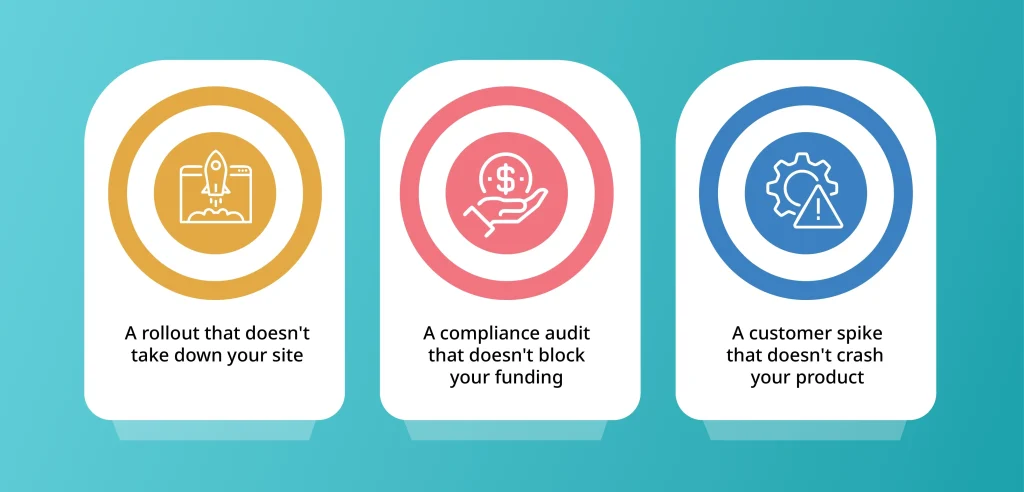
For companies where uptime and trust are non-negotiable, this role is about stability.
Not having one means hoping things won’t break. Hiring one means knowing they won’t.
Salesforce didn’t scale to 30 billion searches a month by chance. They did it while maintaining zero downtime and sub-second response times, even under massive, unpredictable demand. Behind that consistency was a team fully focused on infrastructure health and elasticity, fine-tuning performance in real time.
That’s not luck. That’s what happens when operational ownership is built into the system and not bolted on after things break.
Building a product gets you to market. Keeping it stable, fast, and secure as you grow is what keeps you there. That’s where the real complexity and real value live.
A dedicated Cloud Operations Engineer doesn’t just maintain infrastructure; they turn it into a strategic asset, shifting your team from firefighting to forward momentum.
Frequently Asked Questions About Cloud Operations Engineers
What is the difference between a Cloud Operations Engineer and a DevOps Engineer?
A Cloud Operations Engineer manages cloud infrastructure after deployment — monitoring uptime, optimising performance, and handling security and incident response.
A DevOps Engineer focuses on the software delivery pipeline — building CI/CD workflows, automating releases, and integrating development with infrastructure.
In simple terms:
- DevOps delivers the code
- Cloud Ops keeps it running reliably
Both roles are essential, but they focus on different phases of the system lifecycle.
How does a Cloud Operations Engineer help reduce costs?
They reduce waste by ensuring resources match demand. This includes:
- Right-sizing instances to avoid overprovisioning
- Auto-scaling and shutdown policies for non-production environments
- Cost tagging for team-level accountability
These optimisations often save 20–40% on monthly cloud bills without sacrificing performance.
Can small businesses benefit from Cloud Ops support?
Yes, especially lean teams without in-house infrastructure expertise.
Cloud Ops support improves uptime, secures access for remote teams, and keeps costs predictable. Even part-time or fractional support can prevent technical debt, avoid outages, and help small teams scale with confidence.
What are the business benefits involved in cloud architecture?
Cloud architecture offers several concrete business benefits:
- Cost efficiency: Reduces capital spend with pay-as-you-go pricing.
- Scalability: Automatically adjusts resources to match demand.
- Resilience: Built-in redundancy ensures uptime and continuity.
- Speed: Enables fast deployments via automation and CI/CD.
- Security: Includes encryption and compliance-ready controls.
- Global reach: Low-latency access through worldwide data centres.
- Agility: Empowers teams to build, test, and launch quickly.
These advantages help businesses move faster, operate reliably, and scale without infrastructure bottlenecks.
Explore our BLOG
Recent articles

ISO 42001 Explained: Requirements, Certification and What Your Engineering Team Must Build
ISO 42001 is the international standard that demonstrates your organisation governs AI properly, and enterprise...
read full article

Is Claude Down? Anthropic Outage: Protect Your Cloud Infrastructure
Claude went down across every surface on 29 September 2026. From 14:00 to 14:59 UTC,...
read full article

Top 10 Healthtech Companies in 2026: What Their Growth Means for AI and DevOps
Every software change that reaches a hospital has to clear regulatory, legacy system, and clinical...
read full article