


DevSecOps is heavily on the rise and there is a good reason why. While DevOps integrated operations and development in a harmonized and continuous loop, DevSecOps brings things to even higher level by adding a security factor to SDLC.
There is an increasing need for high security application delivery as the use of Cloud Computing and SaaS applications is on the rise. It’s not only about fast application delivery, it is also about improving cloud security.
According to Emergen Research Report, DevSecOps market is about to reach $23.42 billion value in 2028 with a CAGR of 32.2% during the period 2020-2028.
So, if your plan is to build an app, gaining an insight into how DevSecOps can help you along the way is a must. To help you understand why DevSecOps is critical in ensuring cloud security, we will dive deeper into all the benefits it brings.
How can DevSecOps Help Tackle Key Security Challenges
While IT departments mainly focus on keeping the IT infrastructure and the company’s network secure, DevDecOps teams are in charge of monitoring product security during the development and launch of the app. On top of this, they are in charge of monitoring processes, incident management, automating security measures, and gathering risk analysis. Here are some of the crucial benefits of DevSecOps for cloud security.
Building a transparent and open environment
DevSecOps gives open communication between teams and business units allowing for all the team members to stay engaged during the processes like tracking and monitoring cloud security and cloud migration. You need to keep in mind that it may take some time to put all the DevSecOps procedures on track so that you can address all the potential security issues on time.
Gathering all data in a single data storage
Teams gather data from different sources and feed it back into the creative process using DevSecOps process suite and data management. As a result, this gives faster enhancements of the apps that are being developed.
DevSecOps helps operation and technical teams elaborate on the gathered data and turn that data into actionable insights. All of this helps save a lot of time during product development and imposes better CI/CD automation.
Improving customer credibility
When the team collaboration is on a higher level and when everyone on the team is aware of the company security policy, building more secure systems is much easier for everyone in the company. This, helps build a stronger company trust. When there are security issues, customers can easily choose to use some other, more reliable and secure product.
Better testing and building approach
DevSecOps security toolkit gives automatic compliance and container security checks. As a result, automation minimizes the impact of the human component and helps the tech personnel share experiences, learn from one another and improve the team’s cohesion.
Providing security in a cost and time-efficient way
There’s no doubt that preventing security issues from happening instead of dealing with them once it is too late is a much better approach. One of the most important benefits DevSecOps brings to app development is that it helps organizations eliminate possible threats before they have a negative impact on the internal IT environment.
This ultimately, allows businesses to decrease their vulnerabilities and save much time and money. DevSecOps fast app delivery reduces the need to repeat procedures and do unnecessary reviews and needless rebuilds, thus making the entire process more efficient and affordable.
This significantly improves customer experience and satisfaction allowing companies to bring new customers and build a great company reputation.
DevSecOps helps with business continuity
Businesses which recognize the importance of maintaining the collaboration between business continuity professionals and cyber security professionals can gain a lot of benefits from DevSecops.
When combined with a well-defined business continuity plan, DevSecOps brings a stronger focus on threat detection and approach including a clear explanation of all the responsibilities and duties of each team member.
Cost-effective and rapid software delivery
Security issues can lead to time delays if they are not developed in a non-DevSecOps environment. This further requires fixing the code and various security issues which can cost companies a lot of time and money. On the other hand, leveraging DevSecOps allows for significant cost reduction and time efficiency as it minimizes the need to repeat the process to resolve security issues.
What are the best practices for DevSecOps?
DevSecOps is designed to help you incorporate security into your delivery, development and operational processes. Here are a few practices you should keep in mind when working with DevSecOps:
- Shift left
- Implement continuous integration and continuous delivery
- Implement obfuscation techniques
- Threat modeling
- Adopt a microservices architecture
- Use cloud-native technologies
- Encrypt data in motion
- Implement role-based access control
- Monitor and log activity
- Implement DevOps at all levels of the organization
How to deliver software faster with DevSecOps?
Simply adopting DevOps practices is not enough to be successful. To truly get all the benefits of DevOps, organizations must have a security-minded approach and implement DevSecOps best practices.
Deployflow has a team of DevSecOps experts with long years of experience who are proficient at using the latest tools and industry best practices. To learn how we can help you achieve access, reach out to one of our experts.
Explore our BLOG
Recent articles

Is Claude Down? Anthropic Outage: Protect Your Cloud Infrastructure
Claude went down across every surface on 29 September 2026. From 14:00 to 14:59 UTC,...
read full article

The SOC 2 Remediation Roadmap: From Compliance Dashboard to Passed Audit
This SOC 2 remediation roadmap takes you from a red compliance dashboard to a clean...
read full article
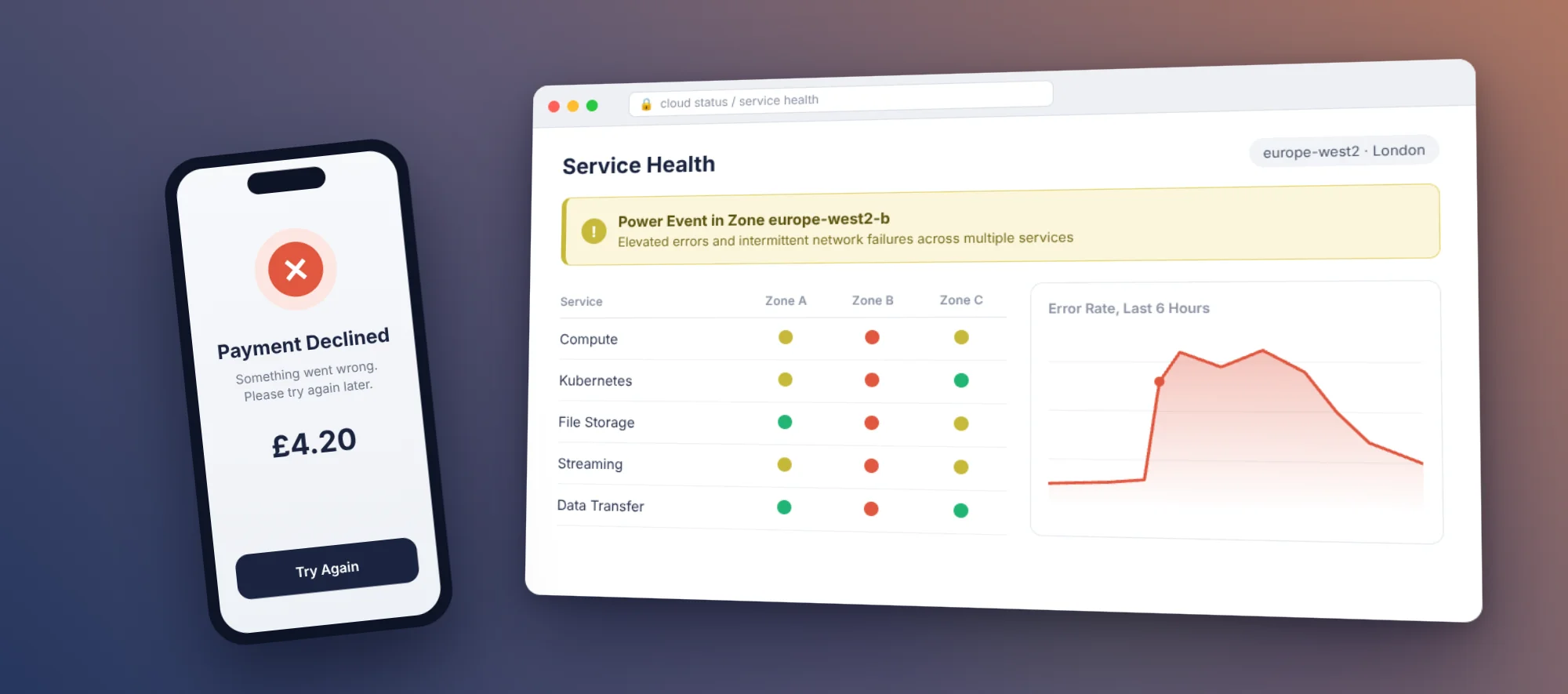
Is Google Cloud Down? The GCP Outage That Froze Revolut Cards and What CTOs Should Fix Now
Yes, Google Cloud went down in London. A major Google Cloud outage hit the europe-west2...
read full article