


Executive summary: Mobile commerce is booming, with sales set to hit $710 billion by 2025, so it’s crucial for Shopify store owners to optimise for mobile. Using Shopify features like AR shopping, chatbots, and personalised analytics can really boost your store’s performance. Brands like Allbirds and SHEIN are already seeing success with these strategies. With trends like AI, social commerce, and AR shaping the future, Deployflow can help you build a fast, user-friendly mobile store to stay ahead.
Did you know that 70% of the world’s population now uses smartphones? It’s no surprise that mobile commerce is booming, and it’s only going to keep growing.
By 2025, retail mobile commerce sales are expected to hit a staggering $710 billion, far surpassing the $510 billion estimated for 2023. Businesses that don’t keep up with the latest trends risk falling behind the competition. But don’t worry-we’ve got you covered!
In this blog, we’ll break down the key steps to optimising your Shopify store for mobile commerce in 2025. We’ll also highlight some success stories and take a look at the top trends shaping the future of mobile commerce.
Let’s dive in!
What Is Mobile Commerce?

Mobile commerce or m-commerce is a popular term for all of the online commercial transactions that take place via mobile phones. It developed as an extension of e-commerce and has been growing in popularity ever since.
Based on recent research by Square, 98% of consumers want to make connections with other businesses using their mobile phones, no matter if they are making phone calls, ordering food, or buying a piece of clothing.
To be able to thrive in the fast-growing market, businesses of all sizes must understand what m-commerce is and make sure they hop on that bus before it is too late. Mobile commerce is a trend that developed naturally as an answer to the shoppers’ need to use mobile phones more frequently instead of using their computers. Here are seven key examples of mobile commerce that exist today:
- In-app purchasing
- Mobile banking
- Social commerce
- Marketplace apps
- Making a purchase
- Mobile ticketing
- Mobile payments/transactions
Why Is Mobile Commerce Critical for Shopify Merchants?
According to Statista, mobile commerce has climbed from 56% in 2018 to 62% by 2024. Also, mobile apps are able to convert 3 times faster and better than mobile websites.
If you own a Shopify store and don’t have a mobile app, now’s the time to prioritise creating one. Here’s why:
1. Higher conversion rates
From speedy performance and easy checkout to personalisation and helpful reminders, mobile apps offer a number of features and capabilities that allow customers to easily and quickly find and buy what they are looking for and come back to your website frequently.
2. Enhanced customer loyalty
Mobile apps develop a direct and seamless connection with your customers by providing them with push notifications, loyalty programs, and advanced features, including GPS, camera, location-based offers, and secure payments.
Push notifications inform customers about some special deals and new arrivals reminding customers to come back to your website to shop more.
On the other hand, loyalty programs reward customers making them feel special and strengthening their loyalty to your brand. Finally, mobile apps are quite convenient as they are always just a tap away.
3. Simplified purchase
Mobile apps improve customer experience by offering features like one-click purchasing and saved payment details. These features enable a smoother checkout process, allowing customers to make the purchase easily and quickly.
4. Reducing ad budget
Instead of spending all of your budget on online ads, mobile apps allow you to use powerful features, including push notifications, loyalty programs, and personalised recommendations to send tailored reminders and offers directly to your customers.
From behavior-based ads and in-app messaging to in-app purchases and streamlined checkout, you will be able to connect with your customers while making all of your investments worthwhile.
5. Push notifications
Apps can instantly inform shoppers about special deals, promotions, and programs and capture their attention much faster than when they are in the online store using the computer. These messages appear right in front of you, making them hard to ignore, so they’re opened more often than emails. Here are a few benefits of push notifications:
- Better retention
- Higher conversions
- Higher open rates
- Enhanced engagement
5 Key Shopify Features for Mobile Commerce Success

Shopping on mobile is a rapidly growing trend, and the technology behind it is constantly evolving. As a Shopify store owner, it’s essential to leverage Shopify’s key features to maximise your mobile commerce sales. Here are the must-know features:
1. Subscription models
To make sure you stay ahead of the game in the ever-increasing market, you need to leverage a subscription-based model, as it allows you to have your favorite products stocked up without having to make orders each time.
Shopify has a number of partner tools that allow you to integrate subscription services that you can adapt to your store’s needs.
2. AR shopping
AR improves the online shopping experience by offering a more engaging, interactive, and user-friendly shopping experience making shoppers quickly checkout.
Shopify has already embraced the trend of offering AR capabilities you can easily integrate into your store, boost your customer experience, and get ahead of the curve.
3. Chatbots and customer service
Customer support plays an enormous part in catering to customers’ needs and improving overall customer experience. AI-driven virtual assistants bring much value in this realm, from guiding users through their customer journey to providing instant answers to their frequently asked questions.
ChatGPT has significantly contributed to these efforts. Best part? Shopify offers a number of chatbot plugins that you can easily integrate into your store such as Codeklip’s Flutter e-Store.
4. Data analytics and personalisation
You can gather a lot of data about shoppers just by keeping track of their behaviour. Using that data to create a user journey will define your road to success and make you stand out from the rest of your competitors on the market.
You can even personalise push notifications to increase conversions. Shopify offers a number of analytics tools you can use to make data-driven decisions, from targeted marketing campaigns to product recommendations.
5. Omni-channel strategy
Whether you will achieve success with your mobile commerce or not does not only depend on your mobile commerce platform. It also depends on the number of marketing channels you are using to promote your products and connect with your customers.
Shopify offers a number of integrations that provide you with a unified approach to your customer data allowing you to easily create and implement your omni-channel marketing strategy.
Best Practices for Optimising Your Shopify Store for Mobile Commerce
To deliver the best shopping experience, it is imperative that you always keep up with trends and optimise your Shopify store for mobile commerce. Here are a few ways how you can deliver a superior mobile customer experience that will make your shoppers come back to your website:
1. Shorten your checkout process
The easiest way to speed up the checkout process is to implement one-click fast checkout options such as Shop Pay. Shopify allows you to implement payment options, including Venmo, PayPal Express, Google Pay, and MetaPay where shoppers can save their information and check out rather quickly.
2. Make sure your website is well-optimised
To be able to provide your customers with a stellar shopper experience, you also need to make sure it is not only accessible but also optimised for shoppers. Here are a few key steps you can implement to achieve this:
- Choose a responsive theme for your website
- Use the right size of fonts that can be easily read on any screen
- Use Google’s mobile-friendly test to learn more about your website’s performance
- Make sure all of your popups, other items, and ads do not distract your customers on the website
- Check any changes you make both on your mobile and the website
3. Simplify the navigation
If your mobile commerce shop has many pages or numerous products, you need to check whether you need to optimise your navigation system for all of the devices. The mobile commerce store should be easy to navigate, compact, simple, and easily accessible for all users. Also, make sure you test your navigation on different screen sizes and browsers to make sure it is responsive on different platforms.
4. Leverage available tools
Shopify and its third-party companies offer many solutions you can use to create an enjoyable experience for your customers. From Shipping Tracker and popups to Shopify themes and Shop Pay, there are many tools you can use to streamline your Shopify store on a mobile.
Top Shopify Mobile Commerce Success Stories
We bring you a few key examples of Shopify mobile commerce success stories:
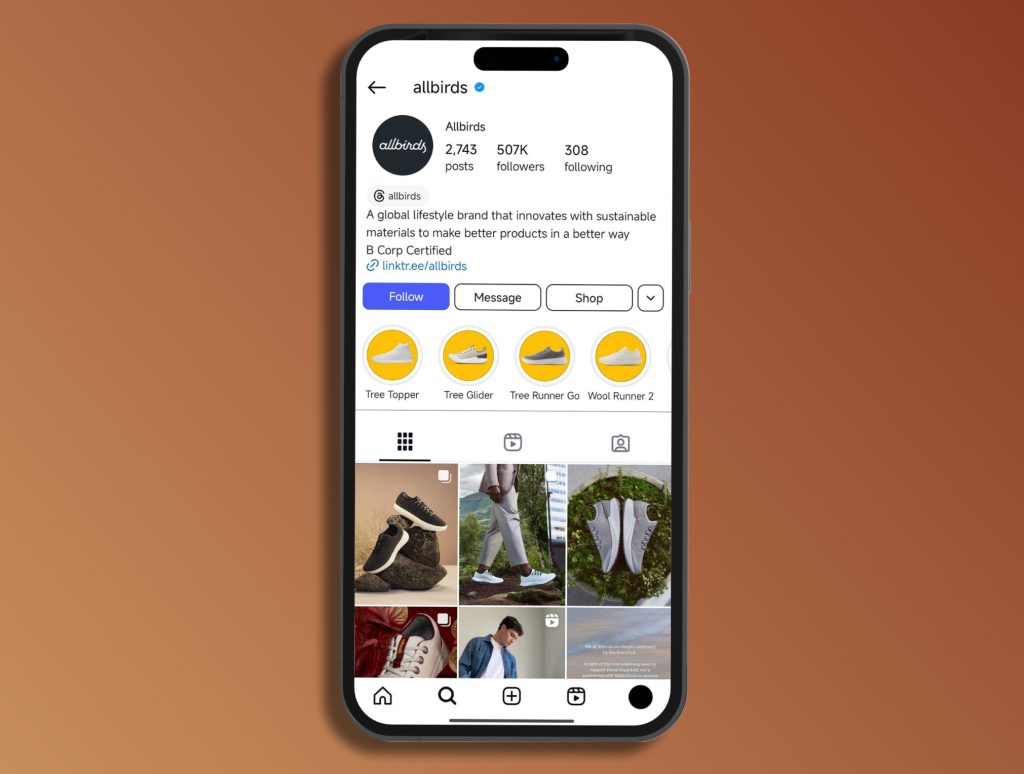
1. Allbirds
Allbirds nails mobile commerce on Instagram by showcasing products with clear pricing, making purchasing easy. Shoppers can quickly decide or check the “Product info” and “More details” sections for extra specifics before buying.
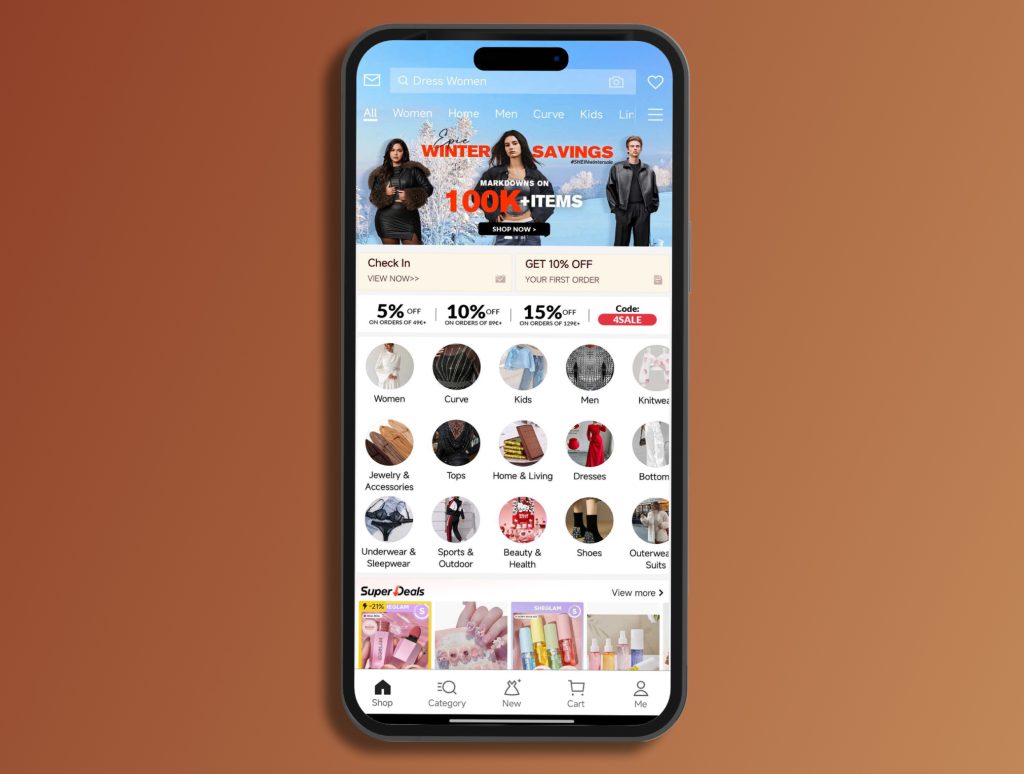
2. SHEIN
SHEIN’s app makes mobile shopping a breeze with easy search, a clean layout, and eye-catching visuals. Plus, users get access to discounts and promos, making it even more tempting to shop.
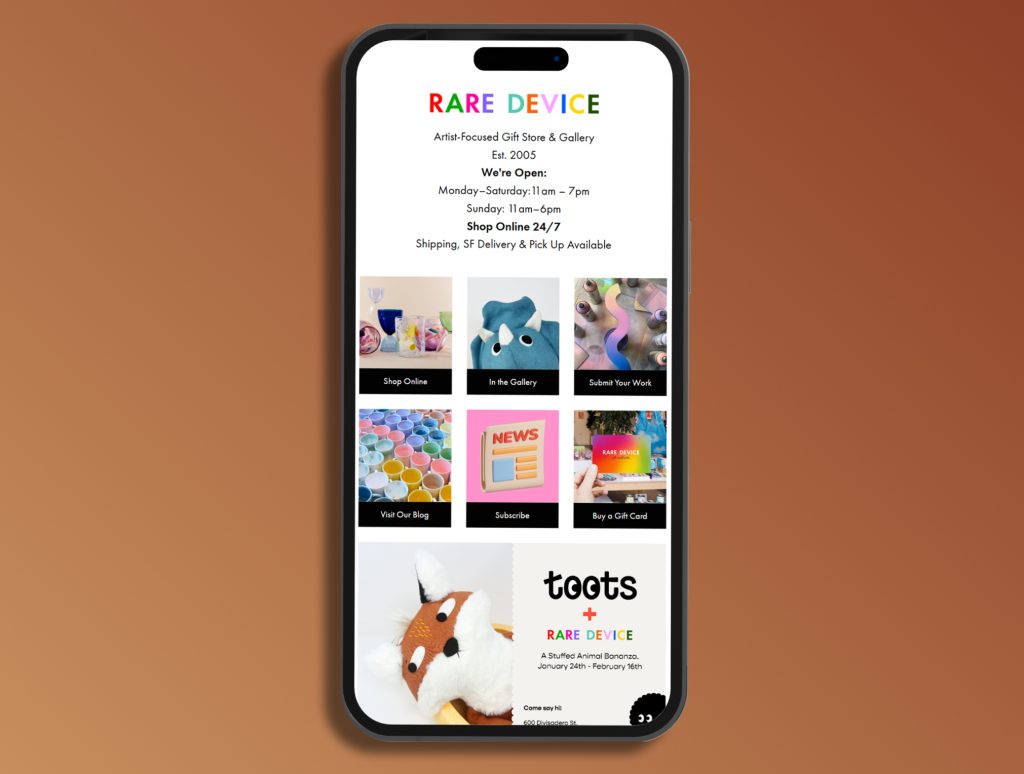
3. Rare Device
Rare Device makes checkout easy with multiple payment options, including Shop Pay and Venmo, so customers can pay however they prefer—fast and hassle-free!
Future of Mobile Commerce
Mobile commerce is evolving fast, and 2025 is set to bring some exciting trends that are changing the way we shop. Here’s what’s shaping the future of m-commerce:
- Shopping Apps Take Over – More people are ditching mobile websites for dedicated shopping apps, which offer a smoother, faster buying experience.
- AI-Powered Personalisation – AI is making shopping smarter with personalised recommendations, chatbots, and better customer insights.
- Social Commerce Boom – Buying straight from social media is the new normal, with platforms like Instagram and Facebook making shopping as easy as scrolling.
- Search Gets Smarter – Image and voice search are making it effortless to find products—just snap a pic or ask your phone!
- Seamless Omnichannel Shopping – Whether online, in-app, or in-store, the shopping experience is becoming more connected than ever.
- Tap to Pay Everywhere – Contactless payments via NFC are making checkout faster and more convenient.
- Try Before You Buy with AR – Augmented reality lets shoppers see products in their space before hitting “buy,” making online shopping more interactive.
- Progressive Web Apps (PWAs) Are the Future – PWAs bring the best of websites and apps together, giving users a smooth experience without needing a full app download.
M-commerce is all about convenience, personalisation, and seamless experiences. Brands that stay ahead of these trends will have a major edge in 2025!
Build your mobile commerce store with Deployflow
Deployflow Shopify development services will help you maximise your sales and website traffic instantly. Our team of Shopify experts can guide you through the entire process and help you build a stellar, user-friendly mobile commerce store on Shopify.
Read more about how we built an e-commerce website for Berrymakers on Shopify here.
Build a store that is set up for success with fast loading and seamless checkout, built for holiday success. Launch in 15 days – get started today! Explore our Shopify Store Special Offer to learn more.
Explore our BLOG
Recent articles

Is Claude Down? Anthropic Outage: Protect Your Cloud Infrastructure
Claude.ai has spent 2026 fighting its own success. Twenty-one incidents landed between 12 August and...
read full article

AI Experimentation vs AI Engineering: The Difference That Decides Whether Your AI Budget Survives
Experimentation buys you knowledge. Engineering buys you a system that still works next quarter, when...
read full article

Why Most Agentic AI Projects Fail Before They Scale
Has your agent been three months from production for nine months? Agentic projects break at...
read full article