


Struggling with scalability, downtime, or team collaboration? As a CTO, you know these are common challenges SMBs face when scaling up.
This blog’ll show you how DevOps experts can help solve these problems. You’ll discover how managed DevOps service differs from traditional IT, how it tackles issues like downtime and team silos, and how it can streamline your software delivery. We’ll also dive into trends shaping the future and share a success story to show you how DevOps can make a difference.
Ready to level up your business? Let’s dive in!
DevOps vs. Traditional IT Operations: What’s the Difference?
When it comes to modern software development and IT operations, many businesses find themselves grappling with the choice between DevOps and traditional IT operations. While they might seem similar at first glance, these two approaches differ significantly in their methodology, goals, and outcomes.
DevOps is a modern approach to software development and IT operations that emphasizes automation, continuous delivery, and collaboration between development and operations teams. DevOps aims to shorten the development lifecycle, improve software quality, and deliver updates to customers more frequently and reliably.
Traditional IT Operations, on the other hand, generally involves slower, manual processes, isolated teams, and longer deployment cycles. In this environment, developers and operations teams often work in silos, making collaboration and quick iteration difficult.
Let’s break down the differences between DevOps and traditional IT operations in a simple comparison table:

Why This Matters for SMBs
DevOps’s speed and flexibility are a game-changer for smaller, agile teams.
Unlike traditional IT, where slower response times can lead to frustrated customers, DevOps enables faster updates and fixes, keeping your users happy and reducing downtime. With continuous delivery and automation, your team can iterate quickly, adapting to new needs and delivering features faster.
For SMBs, this approach directly impacts decision-making.
With limited resources, reducing bottlenecks and getting things done faster is crucial. DevOps as a managed service allows you to compete with larger enterprises without the heavy infrastructure, providing flexibility and responsiveness that are key to your business’s success. By breaking down silos, your development and operations teams can collaborate seamlessly, speeding up the process from concept to customer.
Common Challenges in DevOps Implementation
DevOps is all about making your software delivery faster and smoother, but it can come with some challenges. SMBs often face unique hurdles, like limited resources and time constraints.
Deployflow has helped small businesses overcome these hurdles and get the most out of their DevOps journey. Let’s dive into how we’ve tackled some common challenges:
Challenge: Breaking Down Silos Between Development and Operations Teams
In traditional setups, developers and operations work in separate silos, leading to delays and miscommunication. Deployflow helps break down these barriers by bringing both teams together.
Why This Matters to SMB CTOs
For smaller teams, breaking down silos means getting more done in less time. Deployflow helps SMBs set up simple, easy-to-use collaboration tools so your teams can work together just as smoothly as big enterprises without the complex setups. This means faster delivery and happier customers.
Challenge: Cultural Resistance to DevOps Adoption
Switching to DevOps can feel like a big change, and some team members might be hesitant. With Deployflow, we’ve helped SMBs ease into DevOps with small wins and simple training. The focus is always on showing quick results, like faster releases and improved software quality, so the whole team gets on board.
Why This Matters to SMB CTOs
Changing the way your team works is never easy, but with Deployflow, we make it simple and stress-free. We guide you through the process step by step, immediately showing real benefits. This makes the switch easier for everyone.
Challenge: Complexity in Implementing Automation and CI/CD Pipelines
Automating your processes and setting up CI/CD pipelines can sound complex, especially for small teams
Why This Matters to SMB CTOs
Scalability is key when you’re working with limited resources. Deployflow helps you start small and build as you go. We break it down by starting with one app and scaling up. Tools like Jenkins and GitLab CI make it easier for SMBs to get automation going without needing deep technical knowledge.
You don’t need to invest a ton upfront, and you can grow your automation setup as your business needs evolve. This lets you stay lean and flexible without sacrificing quality or speed.
Challenge: Security Concerns in Integrating DevOps
Security is often an afterthought in traditional IT setups, but it’s a priority from the start with DevOps. Deployflow integrates security into every step of the process with DevSecOps without slowing you down.
Why This Matters to SMB CTOs
Security is a top concern for any business, and for SMBs, it’s especially important to avoid costly mistakes. With Deployflow’s DevSecOps approach, security is built right into the development process, so you don’t have to worry about adding extra checks or slowing down your releases.
DevOps Transformation: 5-Step Strategy for Success
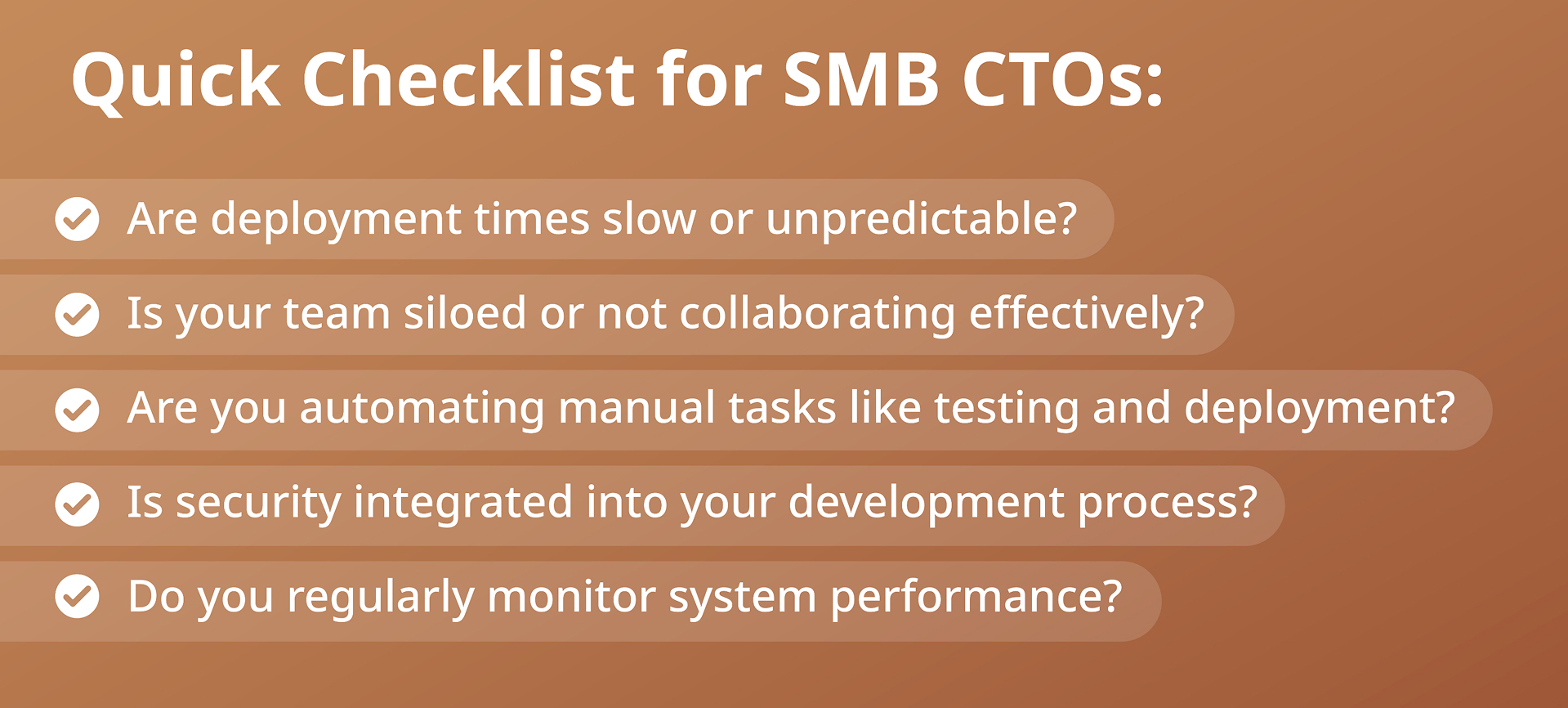
Here’s a simple, 5-step guide to help you transition to DevOps, with practical advice for SMBs to implement without burning through resources.
Step 1: Define Objectives and Assess Current Workflows
Before diving into DevOps, get a clear picture of where you are. Identify bottlenecks, inefficiencies, and processes that can benefit from automation. Set goals like reducing deployment times or improving software quality.
Practical Tip for SMBs: Start by analysing one area, like slow deployment. Improving that will show quick results and motivate the team for more changes.
Step 2: Choose the Right Tools for Automation and CI/CD
Pick tools that match your goals and fit within your budget. Tools like Jenkins, CircleCI, and Travis CI can simplify continuous integration and deployment (CI/CD). For monitoring, tools like Prometheus or Grafana provide real-time insights.
Practical Tip for SMBs: Start small with a couple of tools that help with automation and CI/CD. There’s no need for a full toolset—just the essentials to get you going.
Step 3: Encourage Collaboration Between Dev and Ops Teams
DevOps thrives on collaboration. Developers and operations teams should work together on shared goals. Implement daily stand-ups and track performance together for better communication and problem-solving.
Practical Tip for SMBs: Use tools like Slack or Jira to keep communication open and efficient. Set up regular check-ins to ensure everyone is aligned and working towards the same goals.
Step 4: Implement DevSecOps for Security
Security shouldn’t be an afterthought. With DevSecOps, integrate security into every phase of your DevOps pipeline, from code review to deployment.
Practical Tip for SMBs: Automate security checks early in the process with tools like SonarQube or Snyk. This saves you time later and ensures a secure application from the start.
Step 5: Monitor Performance and Continuously Improve
DevOps is a journey of continuous improvement. Use real-time monitoring tools to track system performance, uptime, and health. Keep an eye on your goals and adjust your processes as needed.
Practical Tip for SMBs: Set up alerts for system health and performance. Adjust your approach as needed based on data insights to ensure you’re always improving.
Overcoming Common Objections
“We don’t have enough resources”
Deployflow simplifies DevOps for SMBs with easy-to-integrate tools and guidance, helping you get started with minimal investment. We’ll help you scale as you grow.
“Our team is too set in their ways”
Don’t worry. Deployflow makes the transition easy. We’ll guide you through the process, step by step, so your team can adopt DevOps at their own pace—no steep learning curves.
Key Trends in DevOps & Automation in 2026
AI-powered DevOps for Troubleshooting and Performance Optimisation
AI is stepping in to help DevOps teams work smarter. It can predict issues in your deployment pipeline, automatically suggest fixes, and even optimise performance. This means fewer surprises and faster issue resolution.
How It Benefits SMBs: AI-driven tools can help your team focus on innovation instead of constantly putting out fires. With tools that automatically troubleshoot, you get to move faster and with fewer errors.
GitOps and NoOps: Automating Infrastructure
GitOps is a way of managing your infrastructure using Git as the single source of truth. It’s all about managing infrastructure as code, making deployments and scaling super easy. NoOps is the idea that operations should be fully automated so your team can focus purely on development.
How It Benefits SMBs: NoOps and GitOps make infrastructure management a breeze. You can automate tasks that used to take up a lot of time, meaning your small team can do more with less. Plus, it’s easier to scale without needing a big team.
Serverless DevOps Workflows to Reduce Operational Overhead
Serverless computing means your team doesn’t need to worry about managing servers. You just write the code, and the infrastructure is handled for you. This saves time and reduces operational headaches.
How It Benefits SMBs: Serverless reduces the burden of managing infrastructure, allowing your team to focus on building the product rather than managing the servers. This leads to faster delivery and lower operational costs.
Cybersecurity in DevOps: Zero-Trust Architectures
Zero-trust security means no one, whether inside or outside your organisation, gets automatic trust. Every request is verified, and strict security is applied across the pipeline.
How It Benefits SMBs: With zero-trust, you’re boosting security without adding complexity. It’s a great way to protect your business from the increasing number of cyber threats without needing a full security team.
Client Success Story: How Deployflow Transformed Strike’s Operations with DevOps
When Strike, a leader in fintech, wanted to enhance its operations, it turned to Deployflow for a comprehensive DevOps solution. Their goal? To streamline their development processes, improve system reliability, and speed up software delivery. The challenge was clear: they needed to modernise their infrastructure to meet growing demand without sacrificing quality or security.
The Challenge
Strike was facing several key obstacles. Their infrastructure was struggling to scale, resulting in slower deployments, more downtime, and difficulty maintaining performance during high-traffic periods. With their growing customer base, they knew they needed a more efficient, reliable way to manage operations.
Deployflow’s Solution
Deployflow stepped in with a tailored DevOps strategy that transformed Strike’s development and operations. By leveraging automation, continuous integration/continuous deployment (CI/CD), and real-time monitoring, we helped Strike overcome their hurdles and achieve impressive results.
Why Deployflow Was the Perfect Fit for Strike
Deployflow made a real difference for Strike. Here’s why:
- Scalability: Deployflow helped Strike scale easily with cloud-native architecture—perfect for SMBs needing to grow without big infrastructure costs.
- Easy Implementation: Deployflow’s tools integrated quickly, minimising downtime for Strike. SMBs get fast, hassle-free setups.
- Automation: CI/CD and real-time monitoring sped up deployments and reduced errors, saving time for SMBs and increasing reliability.
- Dedicated Support: Deployflow’s hands-on support ensured smooth operations for Strike, making it easier for SMBs to get the help they need, when they need it.
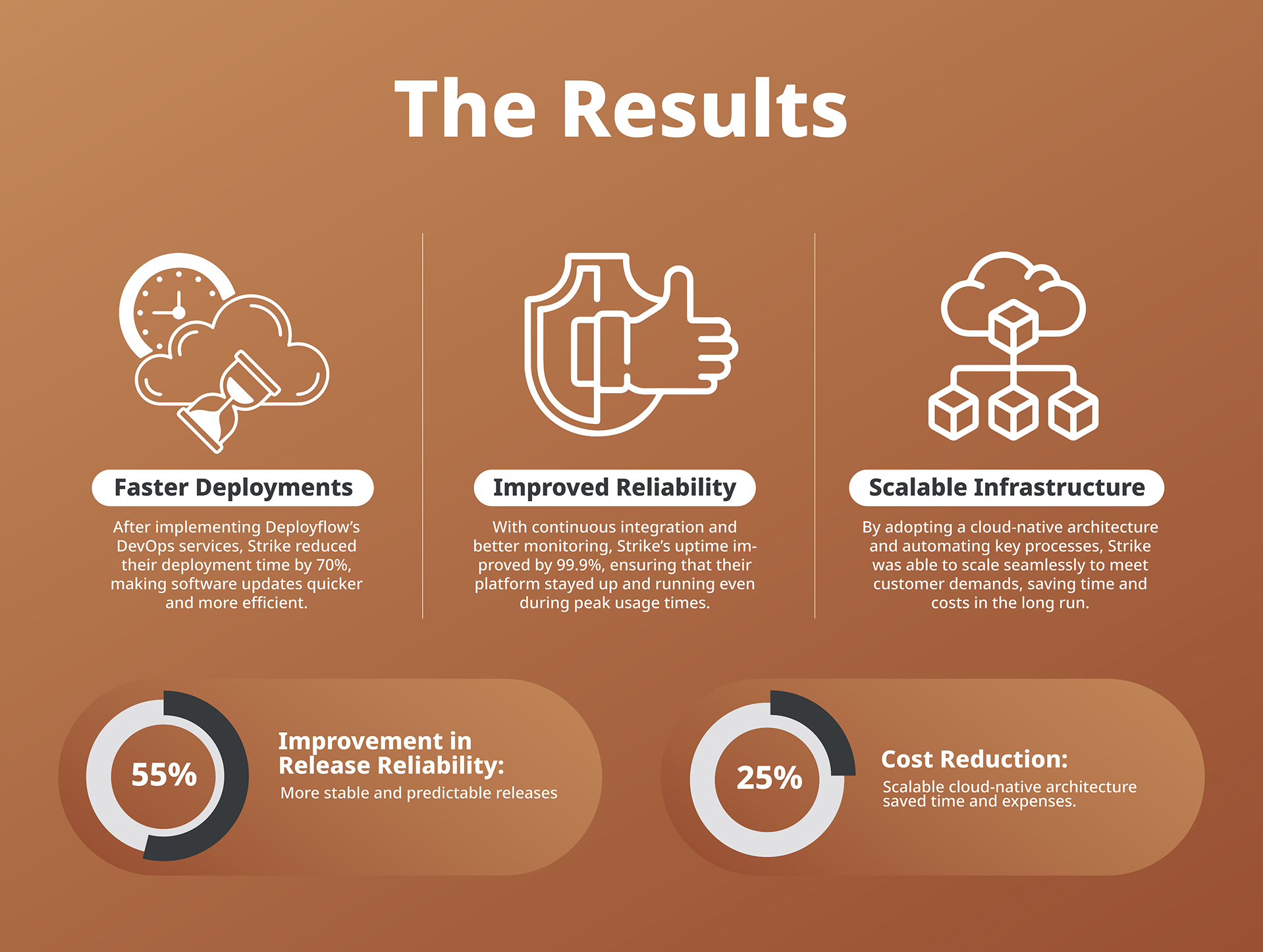
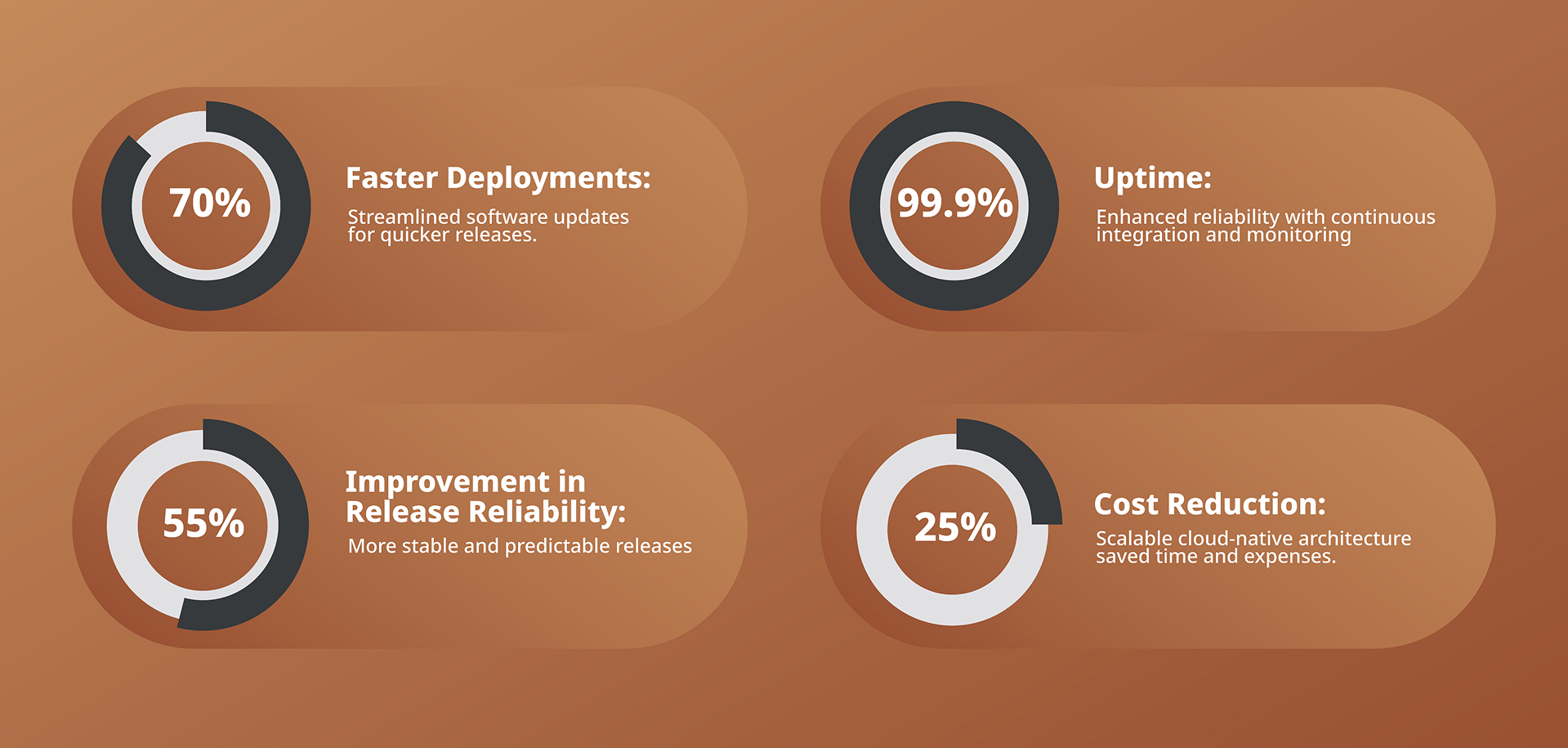
- Cost Savings: The scalable, cloud-native solution cut Strike’s costs by 25%, a key advantage for SMBs looking to maximise their budgets.
Impact
Read the full Strike success story here.
Why Strike Chose Deployflow
Deployflow’s expertise in DevOps, paired with our tailored solutions, provided the perfect fit for Strike’s needs. We understood the importance of speed and security, ensuring that our approach accelerated development and keeping their platform secure and compliant.
The results speak for themselves: a 70% faster deployment time, a 99.9% uptime, and a scalable infrastructure that can support growth without compromising performance.
Ready to take your business to the next level with DevOps? Book a strategy session with Deployflow and let’s discuss how we can help you achieve similar results.
FAQs
What are the benefits of DevOps services?
DevOps services improve automation, enhance efficiency, strengthen security, and foster better collaboration across teams, leading to faster delivery and higher-quality software.
How do DevOps experts streamline IT operations?
DevOps experts streamline IT operations through automation, Continuous Integration/Continuous Deployment (CI/CD) pipelines, infrastructure as code, and proactive monitoring to optimise performance and reduce manual intervention.
Which industries benefit the most from DevOps?
Industries such as tech startups, financial services, healthcare, and enterprise IT experience significant benefits from DevOps, including faster development cycles and improved system reliability.
How much does it cost to implement DevOps?
The cost of implementing DevOps depends on factors like team size, tooling, infrastructure, and training, with potential hidden expenses in integration and ongoing maintenance, but long-term savings can come from improved efficiency and reduced downtime.
Explore our BLOG
Recent articles

ISO 42001 Explained: Requirements, Certification and What Your Engineering Team Must Build
ISO 42001 is the international standard that demonstrates your organisation governs AI properly, and enterprise...
read full article

Is Claude Down? Anthropic Outage: Protect Your Cloud Infrastructure
Claude went down across every surface on 29 September 2026. From 14:00 to 14:59 UTC,...
read full article

Top 10 Healthtech Companies in 2026: What Their Growth Means for AI and DevOps
Every software change that reaches a hospital has to clear regulatory, legacy system, and clinical...
read full article