



Even with agile squads, cloud-native infrastructure, and mature DevOps practices, product delivery delays are still common.
Teams often build the right product in the wrong way. It’s too slow, too bloated, or out of sync with business goals.
For CTOs, Heads of Engineering, and product leaders, that means roadmaps slip, teams burn out, and launches miss the mark. And in 2025, when speed and precision are more important than ever, those mistakes are costly.
In this guide, you’ll learn:
- The 5 most common product delivery mistakes tech leaders face today
- How each one impacts delivery timelines and team performance
- What you can do to avoid them and ship with confidence
If your roadmap looks good on paper but nothing’s moving, it’s time to fix the way work gets done. Let’s dig in.
Mistake #1: Overengineering the MVP
One of the most common product delivery mistakes is turning an MVP into a full-scale product before it ever hits the market. Instead of shipping fast and learning, teams end up stuck in development for six months or more, often with dozens of “must-have” features that no one asked for yet.
Why the Mistake Happens
The pressure to impress early users, investors, or partners can lead teams to overbuild. There’s also a fear that launching anything less than perfect will hurt credibility. But in doing so, they risk burning time, money, and developer energy on assumptions.
An Example
A health tech startup spent nearly a year building its “MVP” complete with enterprise-grade encryption and FDA-level compliance. By the time it launched, their competitors had already learned from users and shipped three updates. The product was solid, but late and out of sync with market needs.
A Better Way
The purpose of an MVP is to validate, not to wow. Build only what’s needed to test a clear hypothesis. Use sprint-based squads with tight scopes aligned to business goals, and plan validation cycles before scaling.
For teams working with outdated codebases or bloated early builds, App Modernization services can streamline architecture, reduce technical debt, and bring delivery timelines back under control, without starting from scratch.
You’ll move faster, reduce waste, and avoid roadmap delays caused by overengineering.
Mistake #2: Misaligned Teams and Ownership Gaps
When product delivery slows down, it’s often not due to poor engineering but due to poor alignment. One of the most common issues is when no one’s quite sure who owns what. Product points to engineering, engineering blames unclear specs, and compliance flags risks too late.
The result could be missed handoffs, delayed decisions, and roadmap drift.
Why This Happens
In many tech organisations, business, engineering, and compliance still operate in silos. Teams may attend the same meetings, but they’re not solving the same problems. Without clearly defined responsibilities, accountability gets fuzzy, and velocity suffers.
What Helps
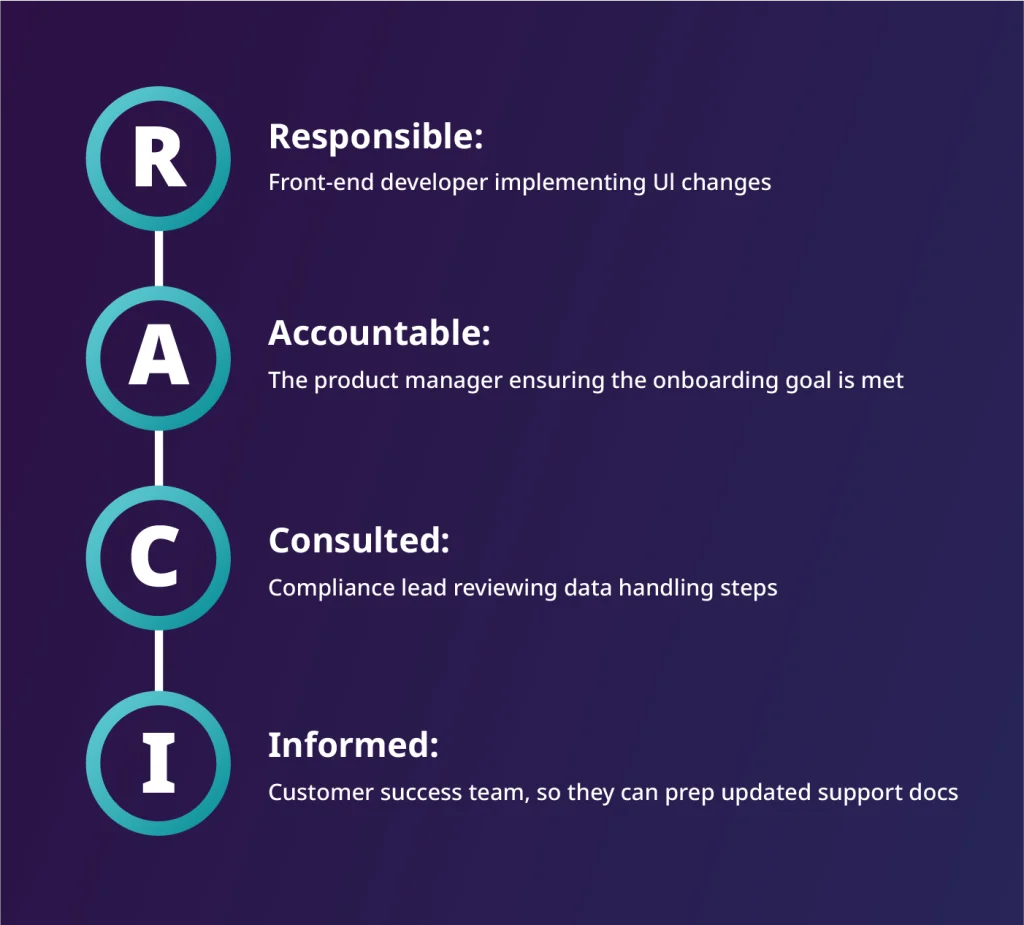
Simple frameworks, such as RACI (Responsible, Accountable, Consulted, Informed), help clarify ownership within fast-moving squads. When paired with shared sprint goals and demo days, teams stay aligned on outcomes, not just output.
Example:
CTO Strategy
Avoid building departments that speak different languages. Instead, form cross-functional pods that include product, design, engineering, and compliance from the start. Give them shared goals and autonomy. When teams co-own delivery, finger-pointing stops, and progress starts.
This shift in structure doesn’t just reduce delays; it creates clarity, boosts morale, and ensures that every handoff moves the product forward.
Mistake #3: Underestimating Integration Complexity
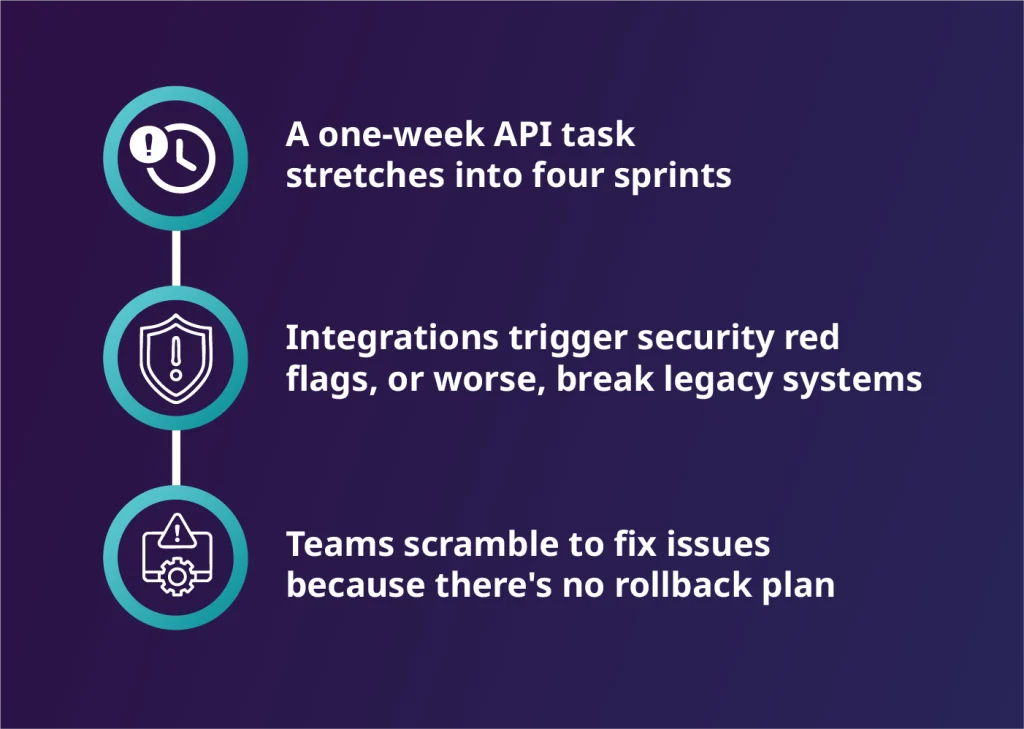
Integrations always sound simple in planning meetings. “We’ll just plug in the API and move on.” But in reality, those four words (“just plug it in”) often cost teams multiple sprints and blow up timelines.
Symptoms
Why This Mistake Happens
Many teams misread vendor documentation or assume their tech stack will play nicely with others. Legacy infrastructure adds friction, and integration steps (such as user authentication, data mapping, or third-party security reviews) often get underestimated or skipped entirely.
How to Avoid It
Instead of jumping straight in, run a discovery sprint or spike to map out technical unknowns. This gives you a realistic picture of what the integration will actually involve.
Also:
- Create a compliance-ready checklist for integrations, covering auth flows, data handling, encryption, and privacy
- Involve DevSecOps from Day 1, not after the build
- Plan for testing, rollback, and staged rollout, not just “go-live”
Tech leaders who treat integration as a core phase of delivery—not a quick plug-and-play—avoid nasty surprises and keep roadmaps on track.
Mistake #4: Relying on Linear Roadmaps in a Rapidly Changing Market
Ever build a feature that was a top priority six months ago, only to launch it after the hype died, the competitor beat you to it, or your users stopped caring? That’s the curse of the linear roadmap: it looks great in a pitch deck, but it can’t keep up with reality.
Symptoms
- Features land months after the market has moved on
- Your team is constantly reworking the scope or chasing shifting priorities
- Stakeholders lose confidence because the roadmap no longer reflects what’s actually needed
Why It Happens
Most roadmaps are built like to-do lists carved in stone. They’re based on what you think the market wants today, not what you’ll learn tomorrow. And when that learning happens (through user feedback, changing regulations, or competitive pressure), there’s no mechanism to adapt without disrupting the whole plan.
A Smarter Approach
Treat your roadmap like a living document. Instead of mapping out every quarter in detail, use rolling 6-week cycles that evolve based on what your team learns and what the market demands.
Here’s how:
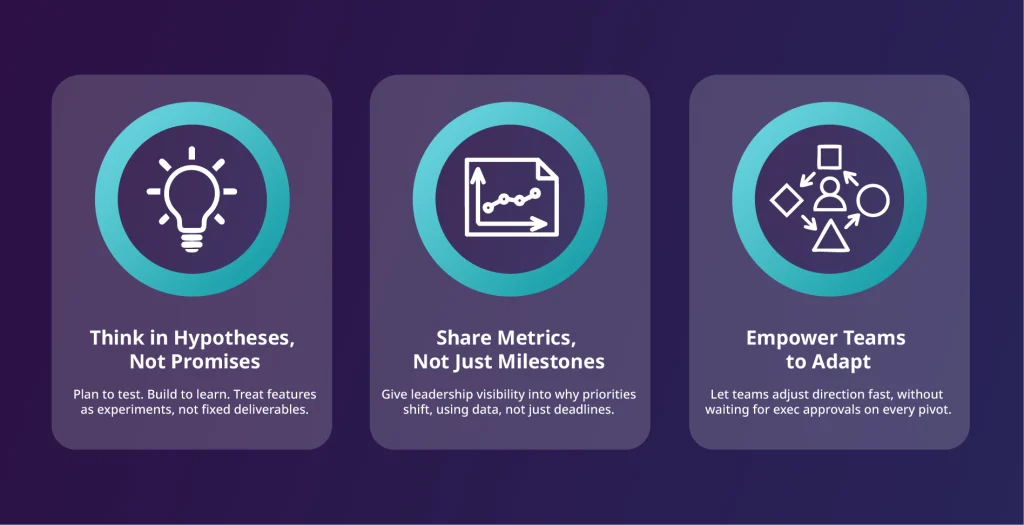
The best product teams in 2025 won’t just build quickly. They’ll learn quickly and adjust without panic. In a volatile market, adaptability beats predictability.
Mistake #5: Ignoring Compliance and Security Until Late in the Process
It’s easy to move fast when you ignore security, until it all grinds to a halt right before launch. Last-minute audit blockers, unexpected vulnerabilities, and emergency fixes can derail even the most polished product.
Symptoms
- A project that’s done but can’t launch because it failed a compliance check
- Post-launch patches to fix security holes that should’ve been caught in development
- Teams are frustrated because sprint goals never mentioned compliance
Why It Usually Happens
Security and compliance are often seen as someone else’s responsibility, usually a team brought in at the end, after features are built. But by then, it’s too late (or too expensive) to fix foundational issues. Meanwhile, sprint goals focus only on delivery, not whether the delivery is secure or compliant.
A Modern Solution
Make compliance part of the process. Here’s how:
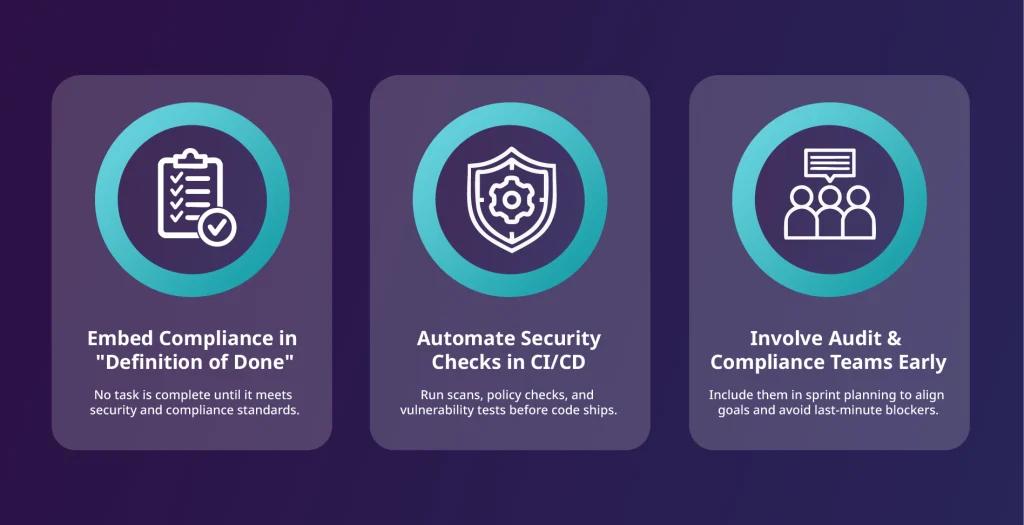
When Dev, Ops, and Security collaborate from Day 1, you build trust faster and release with confidence. In 2025, compliance is a baseline.
According to the 2025 DORA report, high-performing teams are 1.5x more likely to meet reliability targets and twice as likely to report better employee well-being, even under the same delivery pressure.
How to Build a Delivery Strategy That Scales in 2025
In 2025, speed alone isn’t enough. Scalable delivery strategies need structure, clarity, and the ability to adapt in real time. For CTOs, founders, and tech leaders, the challenge is no longer just building but building right, repeatedly, and at scale.
This guide breaks down a proven, scalable delivery strategy designed for fast-moving tech teams in complex environments.
Step 1: Build Delivery Squads, Not Just Dev Teams
Traditional dev teams often work in silos; engineering here, product there, compliance somewhere else. That model doesn’t scale.
High-performing teams tend to stay small; five to nine people is the sweet spot. Go larger, and coordination breaks down. Go smaller, and critical roles like QA or DevOps get skipped. That’s why under-resourced or oversized teams consistently miss targets.
Full-scale delivery squads are small, cross-functional units that own everything from idea to deployment. They combine product, design, engineering, QA, and sometimes compliance, depending on the context.
Why it works:
- Fewer handoffs and blockers
- Shared accountability
- Faster time-to-learn, not just time-to-build
Tip for CTOs: Each squad should be tied to a business goal and not just a backlog
Step 2: Think in Sprints with Outcome-Based Goals
Planning by feature or time estimate often leads to scope creep and missed expectations. Instead, organise delivery around outcomes, and not output.
Examples of outcome goals:
- “Reduce onboarding time by 20%”
- “Enable payments in new market X”
- “Improve conversion rate from demo to paid by 15%”
Run delivery in short, high-output sprints (1–3 weeks) that push toward measurable results.
Outcome-driven sprints help teams move faster, stay focused, and avoid burnout, even when experimenting with fast-moving tech like AI. As of 2025, 78% of companies are using AI technologies, a sharp rise compared to previous years. (source: Hostinger)
Step 3: Use Tech Leads Who Understand the Business
Strong delivery requires tech leads who do more than write code. They should understand the “why” behind the work: business priorities, customer pain points, and compliance implications.
Ideal tech leads:
- Can translate strategy into technical priorities
- Spot overengineering early
- Drive alignment between product, engineering, and compliance
Empower tech leads to say “no” when work doesn’t align with sprint goals.
Give tech leads the authority to push back on requests that distract from the sprint’s core objective.
Step 4: Pair Agile with Governance: Speed + Control
When agile runs without structure, things get messy fast; teams move quickly, but often in the wrong direction.
On the flip side, strict governance without flexibility slows everything to a crawl. If you want delivery that actually scales, you need both: the speed of agile and the stability of smart guardrails working together.
What this looks like:
- Sprint autonomy with built-in guardrails (security, testing, risk reviews)
- Governance embedded in workflows, not tacked on later
- Policy-as-code, automated checks, and a clear “Definition of Done” including compliance
Without DevSecOps, security checks get pushed to the end, right when you can least afford surprises. One overlooked misconfiguration can delay a launch by weeks or expose real risk; far better to catch it early.
To move fast without compromising control, many tech leaders are shifting to delivery models built on embedded governance and automation. DevOps as a Service provides this foundation, combining agile velocity with security, compliance, and full lifecycle visibility from day one.
Step 5: Use the Right Tools & Rituals
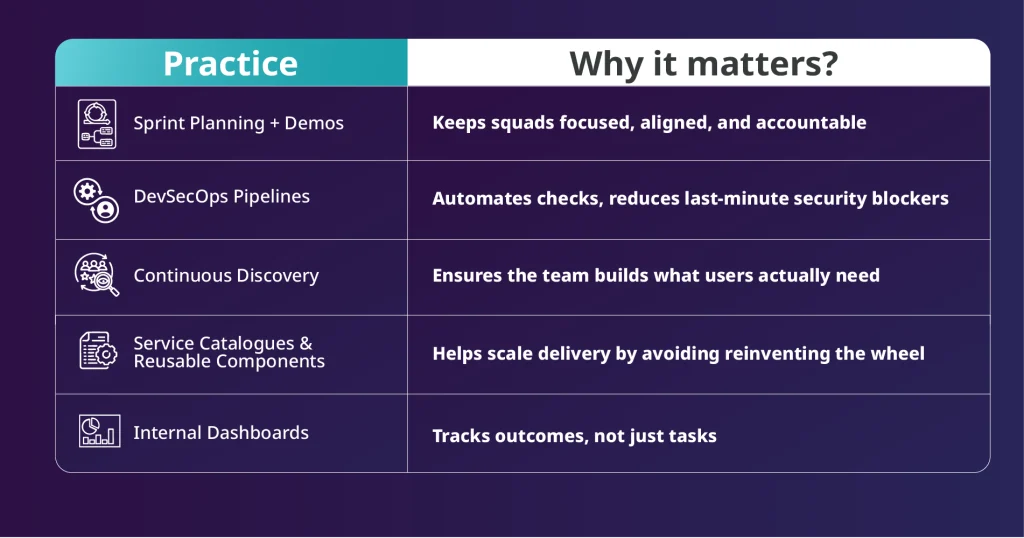
Tooling is the backbone of scalable delivery—but only if it reinforces the right behaviours. Avoid overcomplex platforms and focus on tools that improve visibility, collaboration, and feedback cycles.
Suggested practices:
A Quick CTO Checklist to Avoid Delivery Failure
- ✅ Is your MVP lean enough to test real demand in < 8 weeks?
- ✅ Are product, engineering, and compliance aligned in each sprint?
- ✅ Do you have sprint-level visibility over delays and blockers?
- ✅ Are you building with security and scale in mind from the start?
- ✅ Can your roadmap flex based on feedback or market changes?
To scale delivery in 2025, tech leaders are shifting from traditional dev teams to full-stack delivery squads.
These squads aren’t just groups of coders; they include front-end and back-end engineers, QA testers, solution architects, and DevOps specialists working as one unit.
That structure reduces handoffs, improves accountability, and accelerates time-to-value. With shared goals and cross-functional expertise, full-stack delivery squads move faster and smarter without sacrificing quality or compliance.
And with P‑Suite, you can assemble a full-stack squad designed to execute in focused two-week sprints, tailored to your goals, timeline, and complexity.
Want to see how this works in practice? Learn more about P-Suite in Deployflow’s latest whitepaper.
How to Deliver Faster Without Compromising Quality
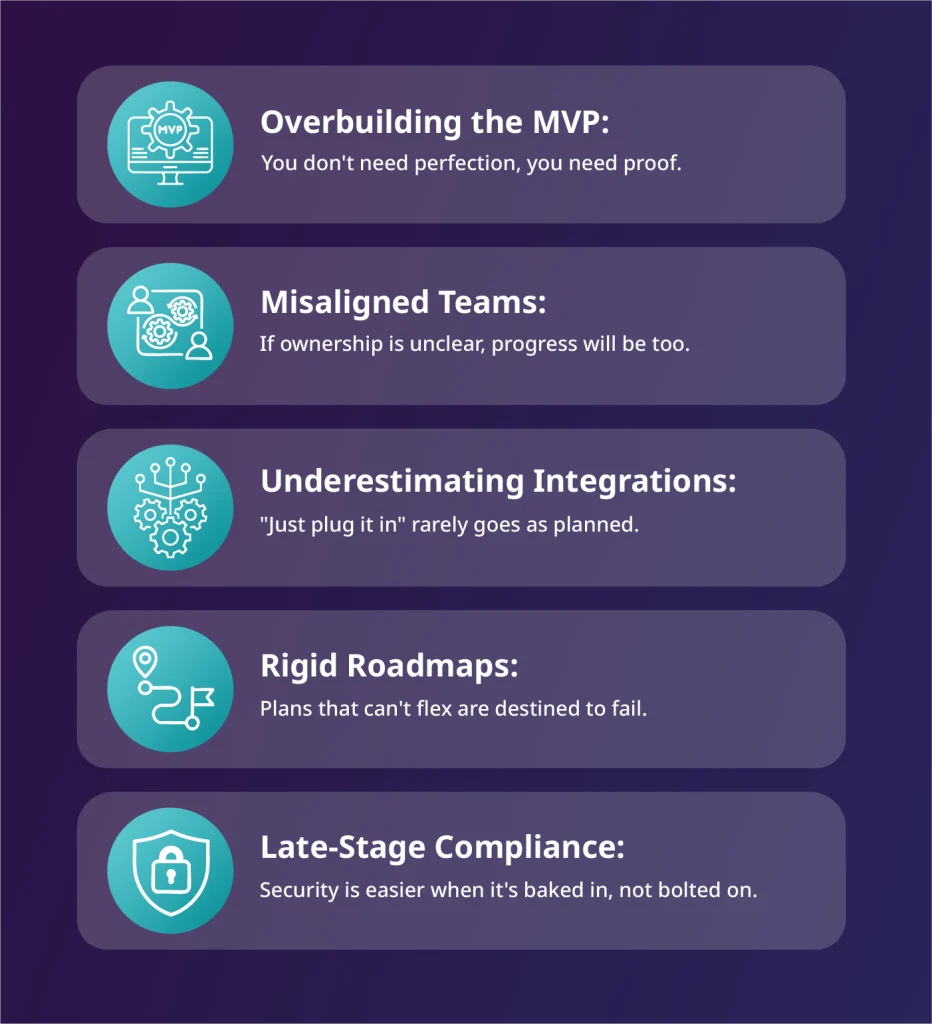
Let’s recap. If product delivery keeps slipping or scaling feels stuck, it usually comes down to one (or more) of these five avoidable traps:
What to Do Next
Most of these mistakes don’t come from bad strategy but from missing structure. The right systems can help you ship faster without losing control.
Deployflow’s P‑Suite helps CTOs assemble full-stack delivery squads that ship in two-week sprints with built-in compliance, clear roles, and real visibility from day one.
Get your squad estimate in 30 seconds.
Frequently Asked Questions: Product Roadmaps, CTO Strategy, and 2025 Delivery Priorities
What is a product roadmap vs backlog?
A product roadmap is a strategic, high-level plan that outlines the why, what, and when of product development. It shows how a product will evolve to meet business goals over time, usually spanning months or quarters.
A backlog is a tactical, detailed list of work items (user stories, features, bugs) that teams will implement. It’s constantly updated, and items are pulled into sprints as priorities shift.
Think of it like this:
Backlog = the packing list and step-by-step route
Roadmap = the journey and destination
What is the difference between roadmap and sprint?
A roadmap sets long-term direction; it defines where the product is headed and why.
A sprint is a short, time-boxed execution cycle (typically 1–3 weeks) where teams work on a focused subset of backlog items that contribute to the roadmap goals.
- Roadmap = strategy
- Sprint = execution
The roadmap informs the sprint, but sprint outcomes (and feedback) can reshape the roadmap.
What is a CTO strategy?
A CTO strategy is a framework for aligning technology decisions with business goals. It includes defining the tech stack, delivery model, talent structure, innovation pipeline, and risk posture.
In modern orgs, a good CTO strategy balances:
- Speed vs stability
- Innovation vs compliance
- Scalability vs maintainability
It’s not just about what tech to build, but how, why, and when to build it for maximum impact.
What are the CTO priorities in 2025?
In 2025, CTOs are expected to lead both technical execution and business innovation. Key priorities include:
- Faster product delivery with outcome-based squads
- Scalable architectures (microservices, containers, cloud-native patterns)
- Integrated compliance through DevSecOps and automation
- AI integration into development workflows and customer-facing features
- Developer productivity, driven by better tooling, automation, and squad structure
- Data governance and ethical tech standards as regulatory pressure grows
CTOs are no longer back-office operators; they’re at the centre of competitive advantage.
Explore our BLOG
Recent articles
ISO 42001 Explained: Requirements, Certification and What Your Engineering Team Must Build
ISO 42001 is the international standard that demonstrates your organisation governs AI properly, and enterprise...
read full article

Is Claude Down? Anthropic Outage: Protect Your Cloud Infrastructure
Claude went down across every surface on 29 September 2026. From 14:00 to 14:59 UTC,...
read full article

Top 10 Healthtech Companies in 2026: What Their Growth Means for AI and DevOps
Every software change that reaches a hospital has to clear regulatory, legacy system, and clinical...
read full article