


As companies increasingly embrace cloud technologies, AWS (Amazon Web Services) stands out as a powerful platform for businesses of all sizes.
In this blog, we’ll dive into the must-know principles of AWS cloud transformation, supported by expert insights from Prakash Pilley and Thomas Radosh at Deployflow. These principles will help small and medium-sized businesses (SMBs) navigate their cloud journey, avoid common pitfalls, and optimise their AWS experience.
AWS Cloud Transformation vs. Cloud Migration: What’s the Difference?
It’s crucial to understand that, while related, cloud migration and transformation are different. Cloud migration refers to the process of simply moving infrastructure, applications, and data from on-premises servers to the cloud.
On the other hand, cloud transformation is a broader, strategic initiative that involves redesigning applications, optimising infrastructure, and leveraging cloud-native capabilities for operational excellence.
Here’s a quick comparison of Cloud Migration vs. Cloud Transformation:

While cloud migration is an important first step, cloud transformation takes businesses to the next level by enabling them to fully capitalise on AWS’s capabilities, from performance optimisation to cost savings and scalability
Prakash Pilley, CEO of Deployflow
Common Challenges in AWS Cloud Transformation & How SMBs Can Overcome Them
While AWS provides tremendous potential for growth, there are several challenges SMBs often face when transitioning to the cloud. From ensuring uptime to managing costs, here’s how SMBs can overcome these common hurdles:
1. Avoiding Downtime & Business Disruptions
Challenge: SMBs worry about service interruptions that can impact revenue and customer experience.
Solution: To avoid disruption, consider phased migration, gradually shifting workloads, and maintaining critical operations during the process. Automated backups and data recovery solutions are also essential to minimise risks.
The key to minimising disruption during cloud transformation is a careful, step-by-step approach. This ensures that businesses can migrate without affecting day-to-day operations.
Thomas Radosh, CTO at Deployflow
2. Managing Cloud Costs & Avoiding Overspending
Challenge: SMBs often face unexpected bills and budget overruns.
Solution: Leverage tools like AWS Cost Explorer to gain insights into resource usage and adjust resources based on actual demand. Pre-plan budgets using AWS Savings Plans to lock in lower pricing and use auto-scaling to ensure resources align with fluctuating needs.
Cloud cost management is one of the most pressing concerns for SMBs. We work with businesses to forecast and optimise their AWS spend and implement best practices for keeping costs under control
Prakash Pilley, CEO at Deployflow
3. Ensuring Compliance & Data Protection
Challenge: SMBs need to meet industry-specific regulations like GDPR, HIPAA, or ISO 27001 but may not have the in-house expertise.
Solution: Leverage AWS’s built-in security and compliance tools to automate and ensure data protection. Use encryption and access controls to meet compliance requirements without the need for additional resources.
4. Upskilling Teams & Managing Cloud Operations
Challenge: SMBs with limited IT teams often struggle to manage cloud environments effectively.
Solution: Consider working with a Managed Service Provider (MSP) to handle ongoing operations or use AWS-managed services that reduce manual effort and automate tasks.
AWS Cloud Transformation: A Simple 6-Step Strategy for SMBs
If you’re an SMB looking to transform your business with AWS, here’s a step-by-step approach to guide you through the process.
Step 1: Identify Business Goals & Choose the Right AWS Plan
Why it matters: Selecting the right AWS services prevents unnecessary spending and ensures you’re using the right resources for your specific needs.
Action: Assess workloads, storage, and computing needs to choose an appropriate AWS pricing model.
Step 2: Plan for Security & Compliance Without Extra Overhead
Why it matters: Automating security and compliance saves time and ensures peace of mind.
Action: Enable AWS-built security features like encryption and access controls to protect data automatically.
Step 3: Automate to Save Time & Reduce Manual Effort
Why it matters: Automation eliminates repetitive tasks, allowing your team to focus on strategic initiatives.
Action: Use AWS auto-scaling and pre-configured cloud management tools to handle routine operations.
Step 4: Optimise Workloads for Performance & Cost Efficiency
Why it matters: It prevents overspending on unused resources.
Action: Use AWS cost monitoring tools and adopt serverless solutions like AWS Lambda for flexible, pay-as-you-go pricing.
Step 5: Control Costs with FinOps Best Practices
Why it matters: Helps SMBs keep cloud expenses predictable while maximising performance.
Action: Set budgets, monitor usage, and reserve computing capacity in advance to reduce long-term costs.
Step 6: Monitor & Improve with Performance Analytics
Why it matters: Continuous monitoring helps improve cloud efficiency without additional costs.
Action: Track usage and adjust resources based on business demand.

Future Trends in AWS Cloud Transformation
Looking ahead, these key trends are likely to shape the future of AWS cloud transformation:
AI-driven Cloud Automation: AI will play a pivotal role in dynamically scaling resources and automatically tuning performance based on real-time usage.
- Multi-cloud and Hybrid Strategies: Distributing workloads across multiple cloud platforms enhances flexibility, reduces vendor lock-in, and ensures better reliability.
- Sustainability-Focused Cloud Solutions: Cloud providers are working to reduce energy consumption and carbon footprints, making cloud adoption even more environmentally friendly.
- Zero-Trust Security Models: This model ensures enhanced protection by verifying every user and device attempting to access cloud applications, regardless of their location.
Case Study: Zilch’s Seamless AWS Cloud Transformation with Deployflow
Zilch, a fast-growing fintech company, needed a scalable, secure, and cost-efficient cloud solution to support their rapid growth. Partnering with Deployflow, Zilch migrated to AWS, optimizing performance while reducing costs.
Challenge: Zilch struggled with scalability issues, high infrastructure costs, and inefficient operations on their previous cloud setup.
Solution: Deployflow leveraged AWS services, including EC2, RDS, and Lambda, to create a highly optimised and cost-efficient architecture. We improved operational efficiency through strategic automation, auto-scaling, and performance tuning.
Results
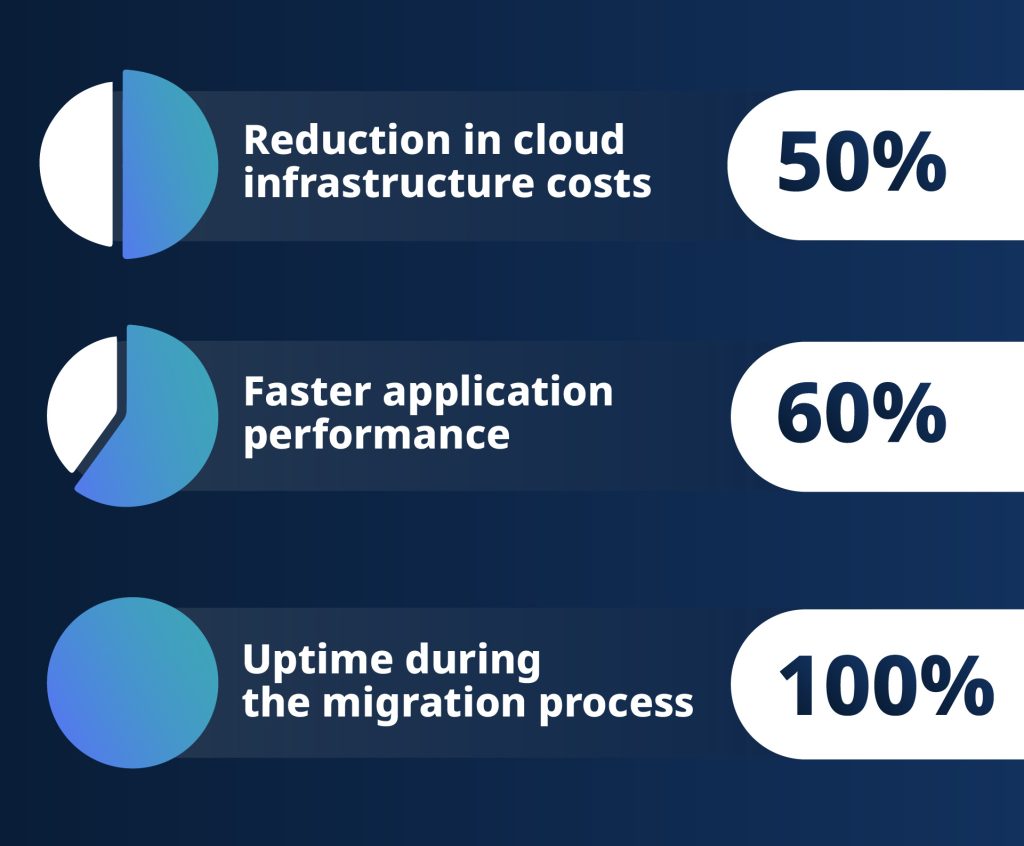
By implementing AWS-native solutions and applying Deployflow’s expertise, Zilch now enjoys seamless scalability and cost control, empowering them to focus on innovation and growth.
Ready for your AWS transformation? Contact Deployflow to optimise your cloud infrastructure for efficiency, scalability, and cost savings.
Read the full success story here.
Accelerate Your Cloud Transformation with Deployflow
At Deployflow, we specialise in helping businesses like yours navigate AWS cloud transformation. Whether you’re moving to AWS for the first time or optimising your existing environment, our team of experts, led by Prakash Pilley and Thomas Radosh, can guide you every step of the way.
Our proven track record of successful cloud transformation projects helps SMBs reduce costs, improve efficiency, and scale their operations for future growth. Whether you’re migrating to the cloud or looking to enhance your existing setup, our expert team is here to guide you through every step of the journey. Ready to elevate your cloud strategy and drive innovation?
Contact us today and discover how our tailored solutions can transform your business.
Explore our cloud migration services to learn how we can help you transform your business with the power of AWS!
FAQs
How can AWS cloud help small businesses save time and reduce costs?
AWS helps small businesses save time and reduce costs by offering scalable, pay-as-you-go pricing, eliminating the need for on-premises infrastructure, and providing automated services for better resource management.
What are the biggest risks in AWS cloud transformation for SMBs?
The biggest risks include unexpected cost overruns, data security concerns, and potential downtime during migration if not properly managed.
How can businesses know if their move to AWS is paying off?
Through AWS cost management tools and performance analytics, businesses can track ROI by monitoring cost savings, performance improvements, and resource optimisation.
What are the most cost-effective AWS tools for SMBs getting started with the cloud?
Some of the most cost-effective AWS tools for SMBs include AWS Lambda for serverless computing, Amazon S3 for storage, and AWS Cost Explorer for budget management and cost monitoring.
Explore our BLOG
Recent articles

Is Claude Down? Anthropic Outage: Protect Your Cloud Infrastructure
Claude.ai has spent 2026 fighting its own success. Twenty-one incidents landed between 12 August and...
read full article

AI Experimentation vs AI Engineering: The Difference That Decides Whether Your AI Budget Survives
Experimentation buys you knowledge. Engineering buys you a system that still works next quarter, when...
read full article

Why Most Agentic AI Projects Fail Before They Scale
Has your agent been three months from production for nine months? Agentic projects break at...
read full article